
What Selling at a Trade Show Actually Means
By 11 a.m. on day one, two neighboring booths have already lived two different shows. In the first, someone stands at the aisle edge, asks every slowdown what brought them here, and writes one line about each conversation on a stack of index cards. In the second, two reps sit behind a folding table checking their phones, and the only traffic they get is competitors collecting intel.
This guide is for the first booth. One clarification before anything else: selling at a trade show, as covered here, means an exhibitor selling to the people walking the floor. If you organize shows and sell booth space to exhibitors, you are in a different business entirely, and most of what follows will read as foreign to you.
The second thing worth accepting early: the booth almost never closes anything. Attendees are moving, clocks are short, and nobody signs a purchase order between two demos. What the floor actually produces is intent, and intent only becomes revenue when someone captures it cleanly and follows it fast. That is why selling at a show is less a personality contest and more a system.
The system has five layers, and every one of them decides whether foot traffic turns into orders. A conversation that opens without a pitch. A process that turns small talk into a lead worth recording. A team that can hold the line for three days. A space that makes those conversations easier instead of harder. And a set of numbers that tells you whether any of it should happen again next year.
The layers run shallow to deep. If you are about to work a booth for the first time, the first two layers will carry you. If you own the booth budget and answer for its results, the last three are yours. Read straight through or jump to your layer; each station stands on its own.
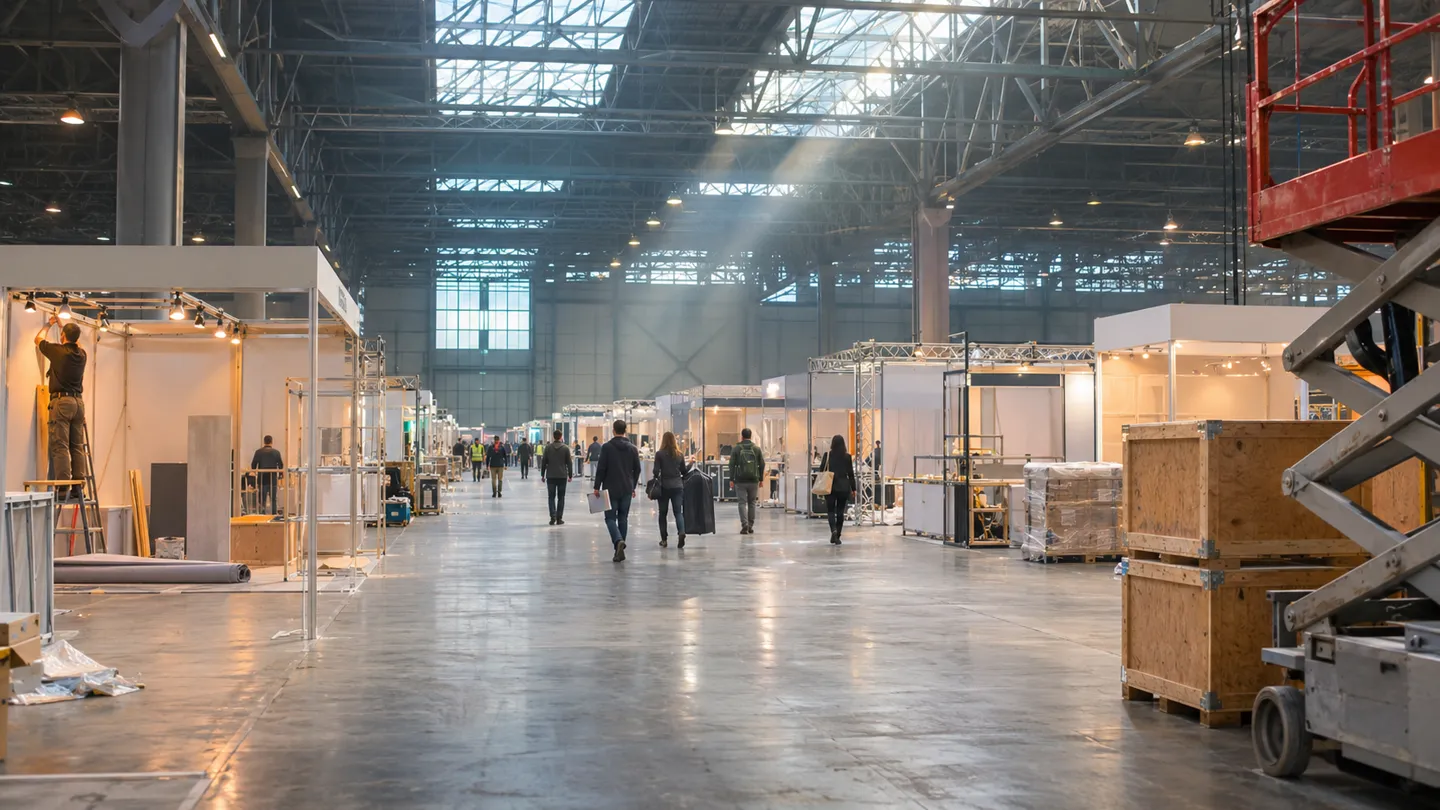
The Show Is Won Before the Doors Open
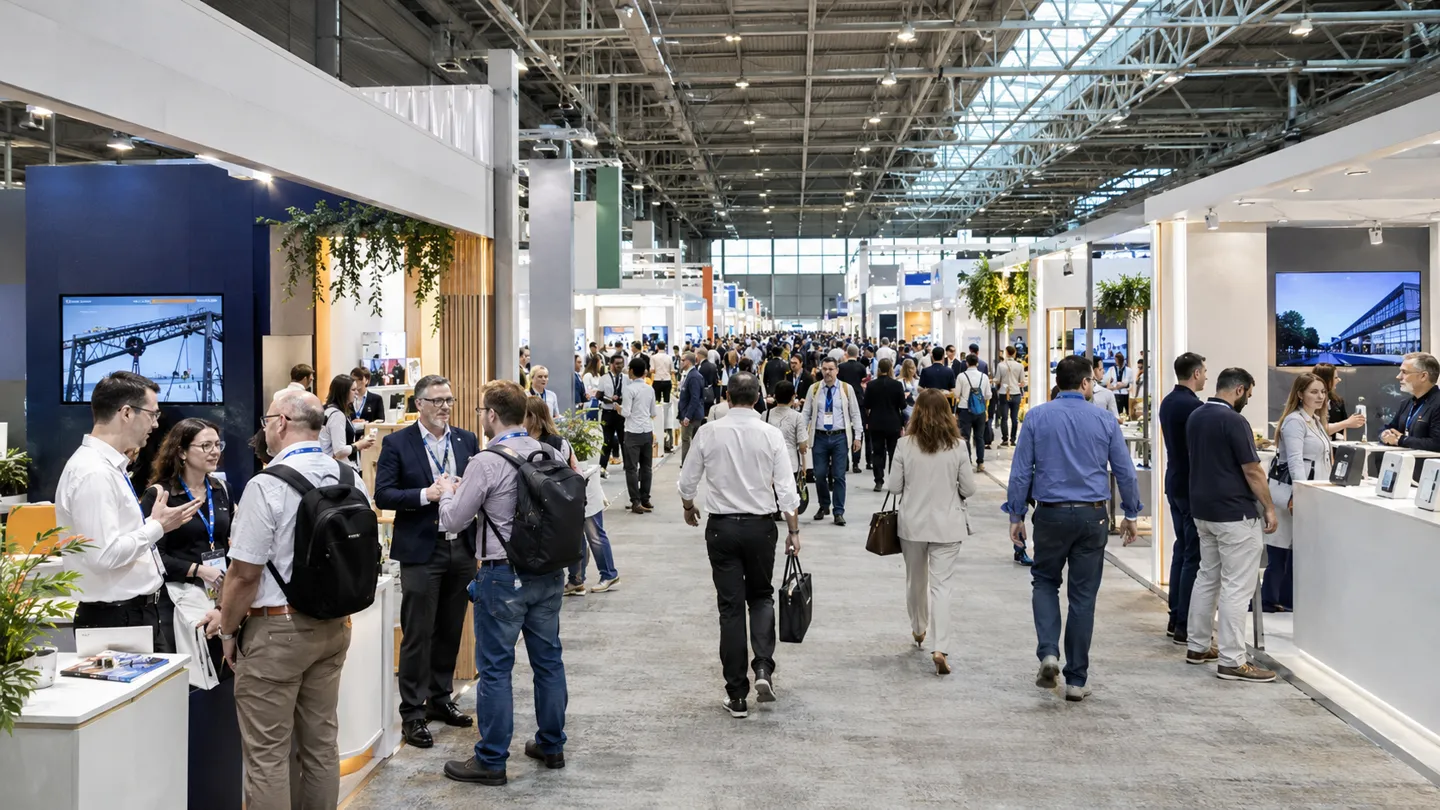
Most attendees decide who they will visit before they ever reach the venue. CEIR research puts it at 76% of attendees planning their booth visits in advance (CEIR research via American Image Displays, 2026). Read that number twice: for roughly three out of four visitors, the competition is decided before anyone says hello. The floor rewards the teams that made that short list.
The Pre-Show Short List
76% of attendees plan their booth visits before the doors open.
Which turns pre-show outreach into the cheapest selling you will ever do. Two to four weeks out, message the accounts you want, by name, and ask for something small: a coffee at the hotel bar, or fifteen minutes between sessions. If they are not attending, the show still hands you a reason to book a call, because you can honestly say you were sorry to miss them there.
No attendee list? Assume presence anyway. Work the prospects in that city, the members of the trade association running the show, and anyone who attended last year. Prefer the false positives: better to hear “not attending” forty times than to miss the one who came.
Rehearse the fifteen-second answer to “so what do you do?” until it survives a noisy hall, and keep adjusting it as you learn which version stops people. Mark the session schedule and the floor plan before load-in: where the talks your buyers attend sit, where your current customers are exhibiting, and where the coffee lines form. Conversations start in coffee lines more often than in booths.
The line between outreach and spam is named versus blasted. A message that uses their name, references their product, and asks for half an hour is outreach. The same text sent to a purchased list with “stop by our booth” is spam, and it burns the very people the 76% told you were already deciding.
Pre-Show Checklist
- Goal written down (qualified leads per day and target accounts)
- Outreach sent 2-4 weeks ahead, by name, asking for coffee or 15 minutes
- No-list fallback worked (city prospects, association members, past attendees)
- 15-second answer rehearsed and adjusted
- Floor plan and session schedule marked (buyer talks, customer booths, coffee lines)
- Capture method ready (index cards or a phone note template)
- Follow-up templates drafted with a blank for the visitor’s exact words
Working a Conversation That Doesn’t Feel Like a Pitch
Doors open, the crowd arrives, and the whole show reduces to ten seconds at a time. Start with where you stand, not what you say. Step out front, past the table line, weight on both feet, phone in the pocket. If you must rest, take the high stool, which keeps your eyes at aisle height and lets you step off without an obvious “getting up” moment. Plenty of booths lose for the simplest reason: their people sit in the back chairs waiting for traffic to walk to them.
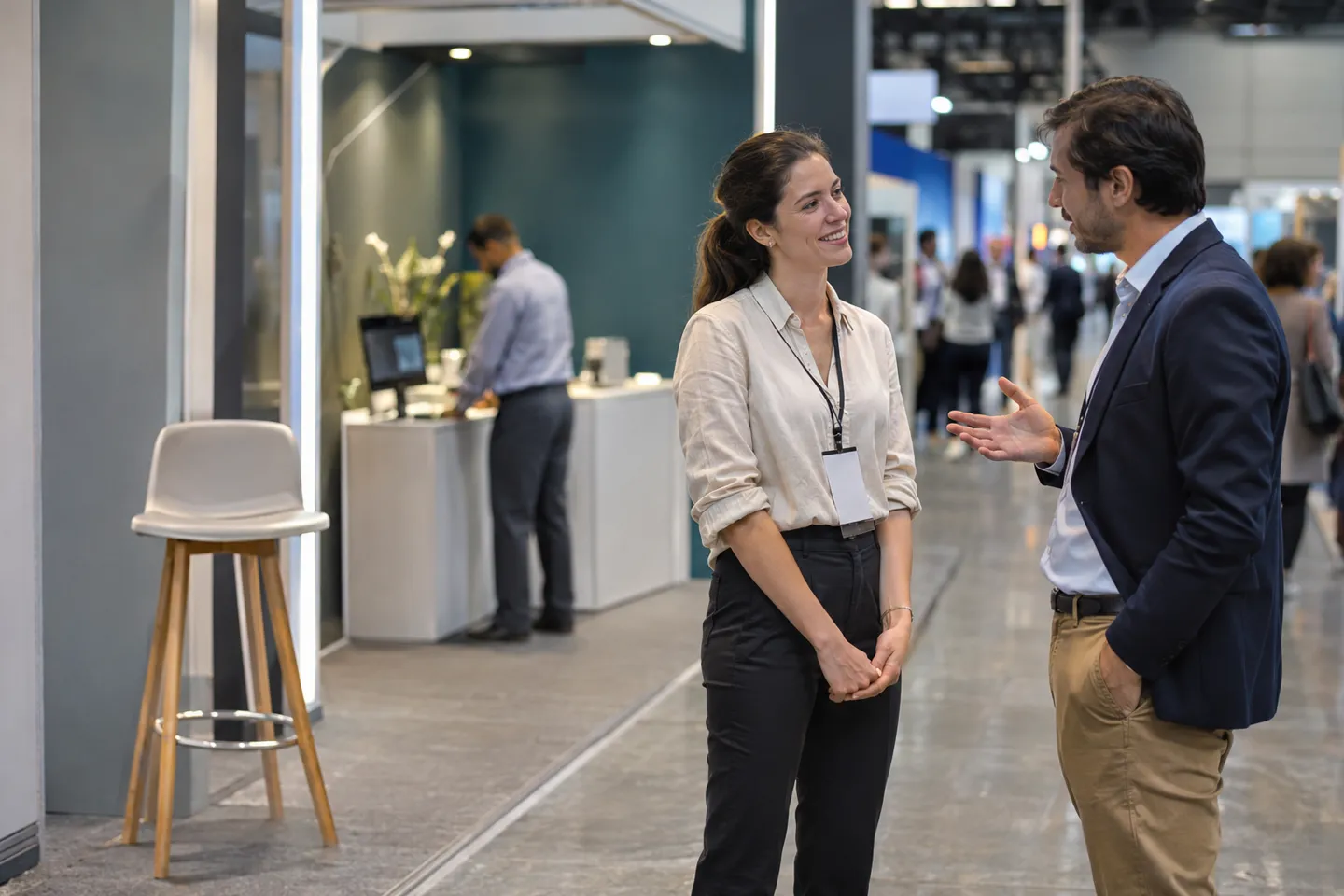
Then open with a question that costs the visitor nothing. “What are you hoping to get out of the show?” works on almost anyone. “What brings you to this aisle?” works when the hall is thick. Both hand the stranger the microphone first, which is exactly what a tired attendee wants.
Hold your pitch until you have two answers: where they are from, and what problem walked them here. The first three sentences of a booth conversation are for listening; the product enters when there is a reason for it. Forcing the pitch at hello is the most common way exhibitors kill their own traffic. Loud attractions do the same damage in bulk: megaphones, gimmicks, and crowd-pullers collect audiences, not conversations, and audiences repel the serious buyers.
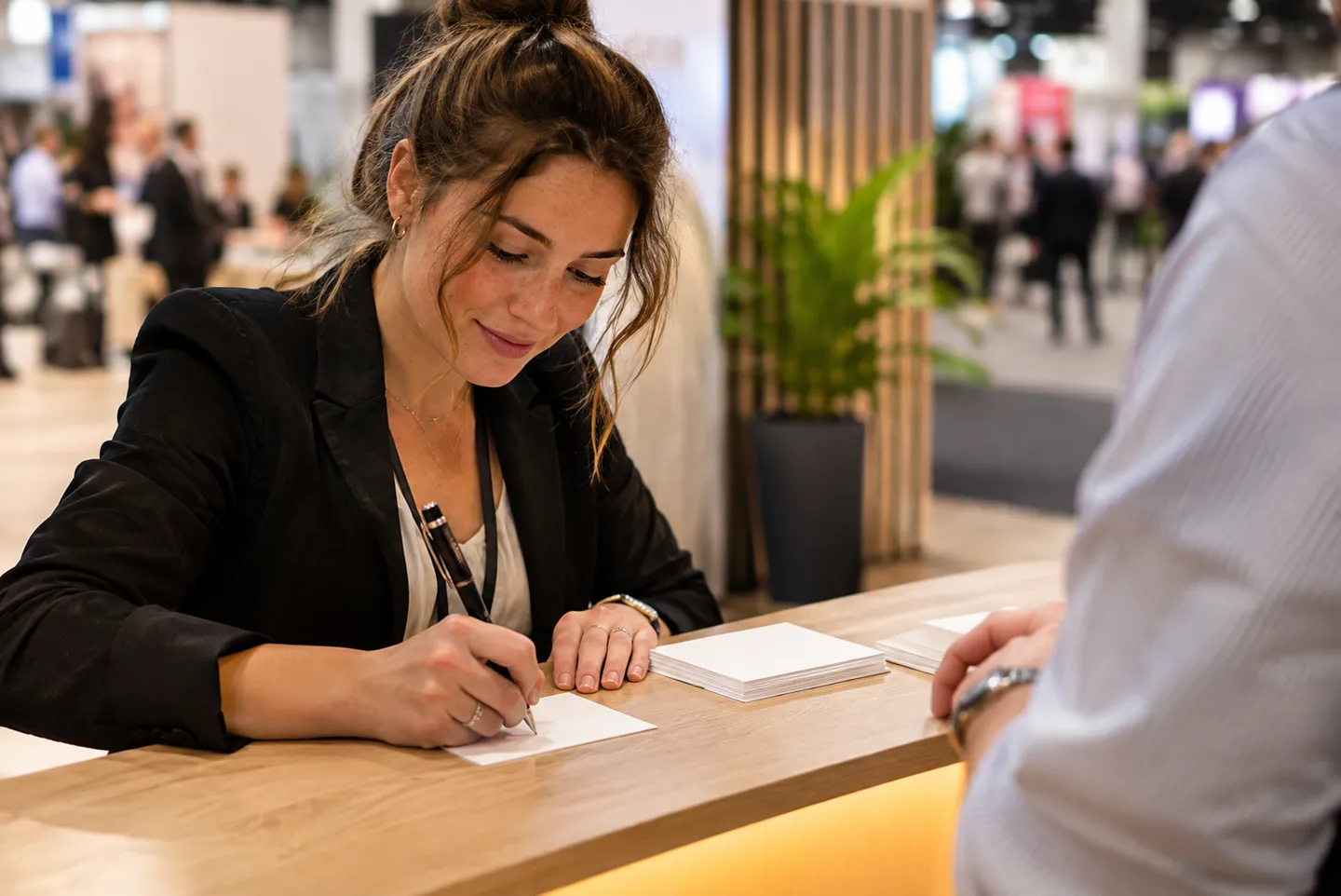
Keep a card or a phone note for every real conversation, and write one line while they are still standing there: who they are, what they said, what you promised. Thirty minutes later you will not remember, and the person who does remember books the follow-up first.
End every good conversation with a scheduled step made on the spot: a call Tuesday morning, a coffee off the floor, a demo link sent the day after. The rule is blunt: the booth books the meeting; the deal closes later, in a quiet office. And when the hall runs dry, work the neighboring exhibitors, because last afternoon is the one window when booth staff finally have time to talk.
From Small Talk to a Lead Worth Following
At day’s end two teams compare numbers. One collected sixty badge scans; the other wrote down nineteen conversations. The second pile is worth more. A lead is a recorded conversation with a next step; a swiped badge is a bet that someone else will do the work.
Qualify with Four Questions
Four answers separate a buyer from a visitor: what they use today, the problem that walked them here, their role in the purchase, and the timeline. Ask them as conversation, not as a form, and the answers will come out in the first two minutes.
Quality versus quantity is a real argument on the floor, and the data lands on the quality side. Exhibitors using digital badge scanning rated lead quality good or excellent at 82%, against 65% for paper forms (CEIR research via American Image Displays, 2026). Tools help, but only when they stay light: a capture form with a dozen required fields dies on the floor, because visitors will not stand there filling forms.
The Minimum Record
Five fields, no more: name and company, the exact phrase they used about their problem, the next step you agreed on, the date it happens, and an urgency mark. The exact phrase matters more than the rest, because a lead you cannot reread in their own words is just a name. And be clear about whose lead it is. Veteran exhibitors watch strangers sweep business cards off tables in bulk; those cards become someone else’s mailing list, never your pipeline.
Follow Up Before the Spreadsheet Cools
Work the follow-up inside 24 to 48 hours, while the hall is still fresh in both minds. Use the recorded phrase to reopen the conversation, not a template, and book the meeting you promised. Teams that send next-morning emails routinely beat the competitors whose leads sit untouched until the week after the show, which is exactly when all the post-show campaigns land at once.
Conversation Triage on the Show Floor
| Who is in front of you | Recognition signals | What to do | When to let go |
|---|---|---|---|
| Planned buyer | Walks in deliberately, knows your category, asks specific questions | Full qualification, record the exact words, book the next step before they leave | Only if the timeline is beyond a year and no project owner is present; mark low urgency, still record |
| Interested passerby | Stops at the demo, asks what it does | 60-second demo, one qualifying question, scan plus a one-line note | When they are filling a giveaway bag; thank them and release |
| Non-target visitor (students, job seekers, neighboring exhibitors) | Badge shows no buying role; questions run to employment or general curiosity | Be courteous, share nothing commercial, keep the post free | Immediately, with a friendly exit line |
| Competitor staff | Deep questions about your product line and pricing | General capabilities only, no pricing, no roadmap | Immediately |
| Existing customer | Knows your team, mentions past orders | Thank them on the floor, ask who else here should meet you, book a review call | Never; these conversations fund next year’s booth |
One line of defense for the pile: if a record has no exact phrase and no scheduled step, it is a contact, not a lead. Count them separately, because they close differently.
Staffing the Booth for Three Full Days
A booth needs two kinds of presence at once: a greeter anchored at the front, working the aisle, and a rover who drifts in from the hall. The rover pulls people over and hands them to the greeter by name. One person cannot do both jobs well. The greeter who leaves to scout empties the post exactly when traffic peaks, and the rover who gets pinned into one conversation stops feeding the booth.
Energy has a half-life. By mid-afternoon of day one, standing smiles turn into seated slumps, and the phone comes out. Attendees read a slumped staffer from twenty feet away and steer around the booth; nothing clears a frontage faster.
Plan for the dip instead of denying it: shift rotations, water runs, and the stool that keeps eyes at aisle level. The stool survives every debate about sitting because it solves the real problem, which is rest without retreat.
None of this survives contact without rehearsal. The fifteen-second answer, the four qualifying questions, the one-line record standard: train them before load-in, not on the morning of opening day. Booth skill is a checklist, not a talent, and a checklist can be rehearsed in an afternoon.
Three staffing failures account for most dead booths: one person locked into an all-day solo shift, the greeter pulled into logistics errands, and training postponed until it is needed. Hit any one of the three and the booth’s conversion dies quietly by day two, with nobody quite sure when it stopped.
A rehearsed team still needs a booth built around the sale: Aplus Expo designs, builds, and installs exhibit booths end to end.
Get a Booth QuoteThe Booth Itself Is a Selling Tool
Booth space usually gets debated as a branding expense, which misses what it actually is: a tool that either lowers or raises the cost of every conversation the team attempts. The same 10 by 10 can host thirty useful chats or a dozen irritated ones, depending on decisions made months earlier at a desk.
Frontage and Flow
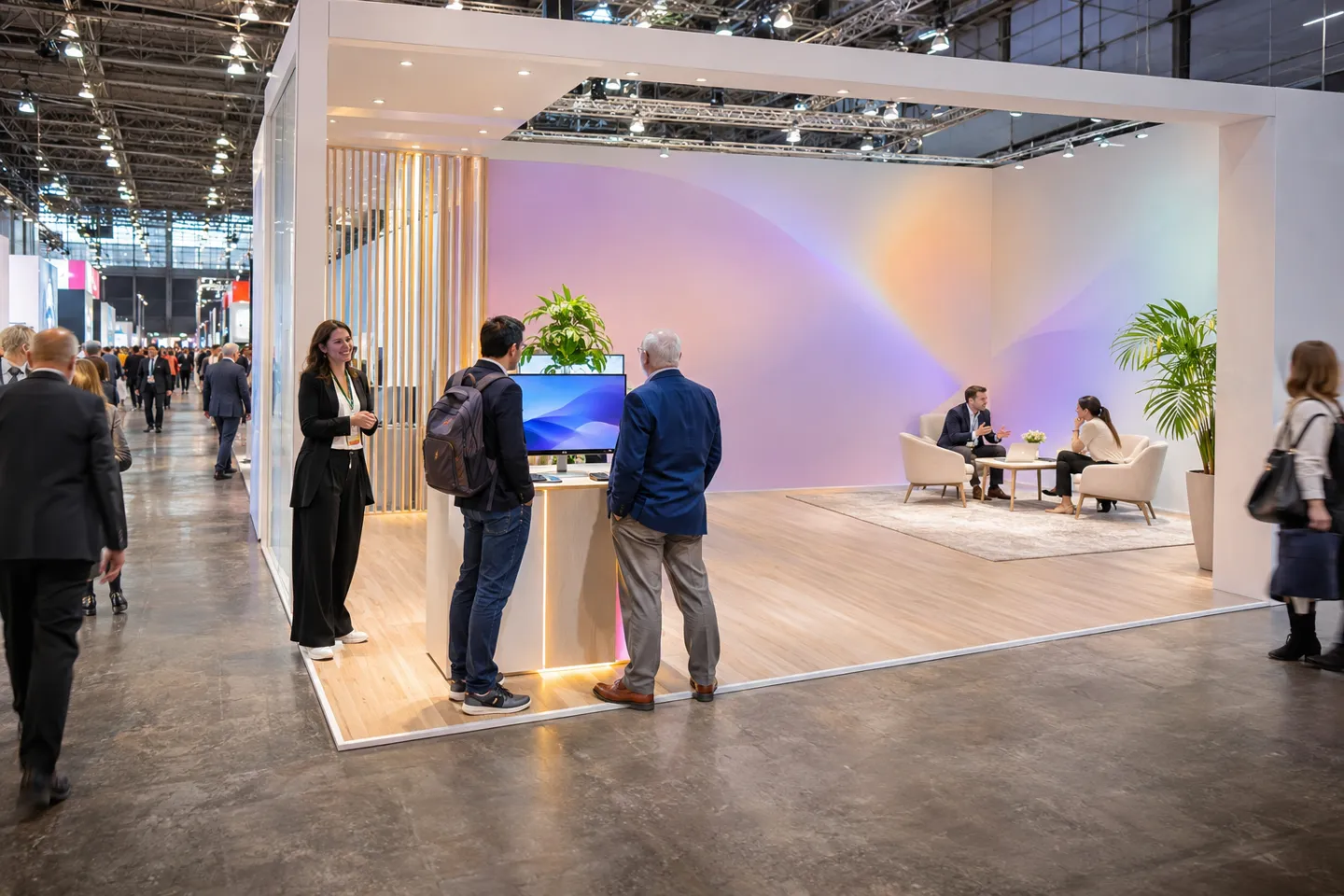
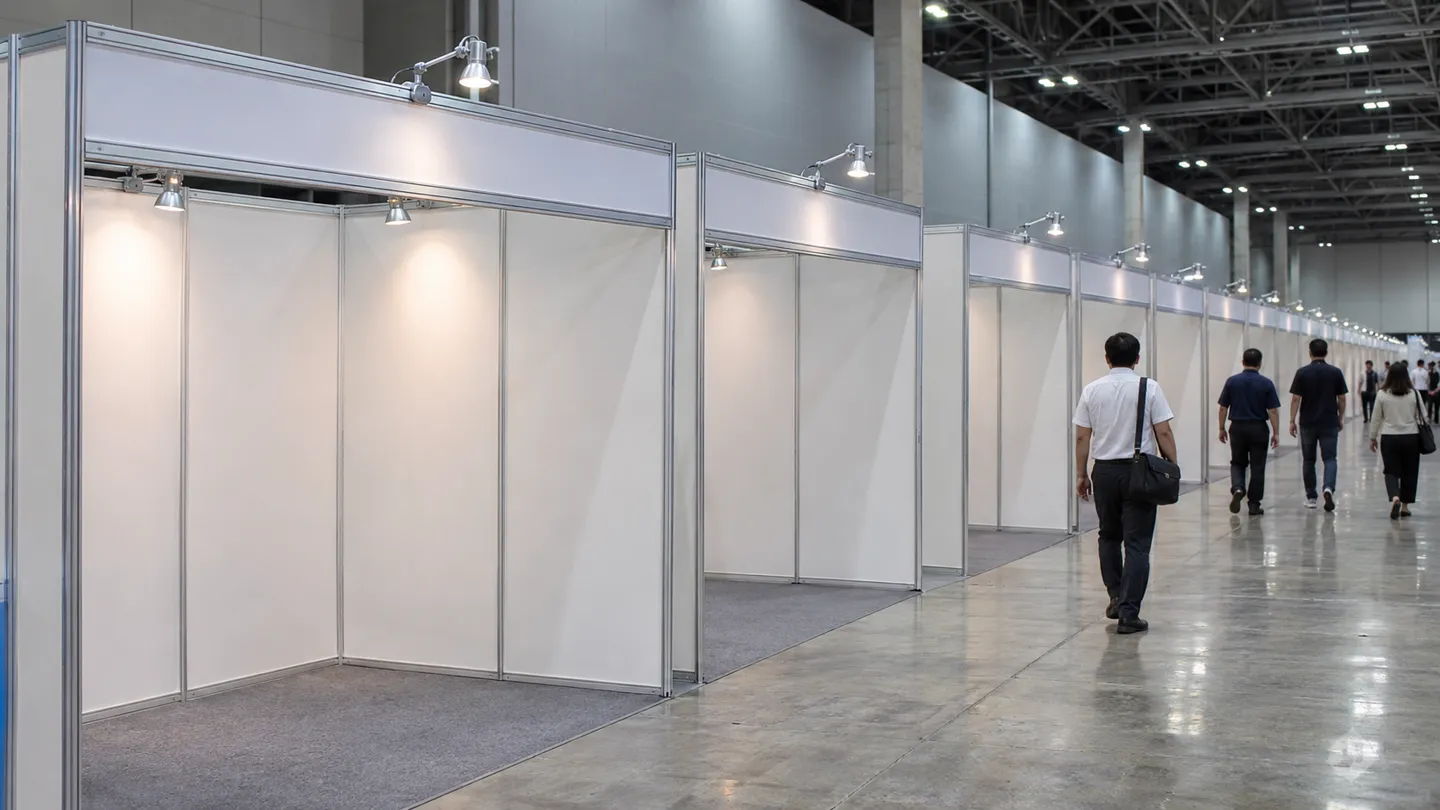
An open frontage invites; a table strung across the front defends; visitors read the difference instantly and vote with their feet. The most valuable move available to a booth team costs nothing: step in front of the furniture. Behind the table you are part of the display; in the aisle you are a person. Flow matters next: put the demo where passing traffic can see it working, and sink the meeting corner into the depth of the booth. A serious conversation should be able to sit down without blocking the entrance.
Demo and Experience
Demonstrations are the honest version of the giveaway war. A raffle pile collects prize-hunters; a working demo collects people who wanted to see the product, which is a very different list to follow up. Plan the demo for failure anyway: a backup screen, videos cached offline, and a staffer who can run it from memory. A dead monitor at 10 a.m. takes the booth’s best asset offline for the whole morning, and nobody walking past knows it was working yesterday.
Graphics That Pass the Ten-Meter Test
Graphics have one job at distance: say who you are and what problem you solve before the visitor decides whether to slow down. Walls of dense text read as homework, and nobody stops to do homework in a loud hall. Run the ten-meter test before load-in: stand far back and ask whether a stranger could say what this company does in one sentence. Keep a damage plan too. Builders with in-house print shops can reprint a smashed mural the same day, which turns an 8 a.m. disaster into a noon footnote.
Meeting Corner and Storage
Serious conversations need somewhere to sit and write, out of the traffic line. Samples, brochures, staff bags, and the shipping boxes all need a home behind the walls, because clutter reads as chaos and chaos lowers stop rates. A booth with a clear demo, a quiet corner, and invisible storage simply makes every conversation in this article easier to hold.
Booth Space vs. the Conversation It Should Serve
| Space element | Conversation it serves | Setup that works | Failure signal |
|---|---|---|---|
| Frontage and flow | First contact and the stop decision | Open frontage, staff in the aisle, demo near the traffic line, meeting corner at depth | Table strung across the front; staff visible only from inside |
| Demo and experience | Turning curiosity into a real product conversation | Working demo with backup screen and offline video, run from memory | Dead monitor, improvised pitch, demo queue with no staffer |
| Graphics at distance | The three-second read that earns a slowdown | One message: who you are, what problem you solve, legible from 10 meters | Dense text walls that only reward people already standing close |
| Meeting corner and storage | Writing notes and orders without blocking traffic | Clear table out of the flow, samples and boxes behind the walls | Brochure piles on the demo table, staff bags in the meeting seats |
One neighboring case, for completeness: selling on the floor without a booth of your own is called suitcasing, and most shows ban it outright. Walk the floor to learn and to meet; the exhibitors paid for the right to sell there, and organizers enforce it.
Running the Numbers Before You Sign the Space
Everything above can be true and the show can still be a mistake, because booths are bought with budgets and judged in spreadsheets. Two calculations decide whether the money was well spent, and both fit on one page before anyone signs the space form.
The Lead Math That Matters
Start with a definition, not a quote. Write one sentence describing what a qualified lead looks like for your product: role, problem, timeline. If you cannot write that sentence, stop here; the rest of the math is decoration. Then work backward from revenue: target, divided by your realistic close rate on qualified leads, divided by the fraction of show conversations that survive the qualification. What comes out is the number of real conversations the booth must produce per day. Every booth decision, size, location, and layout, is now judgeable against one question: does it help the team hit that count?
Where the Money Actually Leaks
The space rental is rarely where show budgets go wrong; the leaks live around it. Drayage and electrical orders, rush premiums, travel, and in union cities, labor rules that add a quarter to a third to build costs. First-time exhibitors in Chicago or New York tend to discover this after signing, which is why the question belongs in the first call with any builder, not the last. The pattern behind most of these leaks is the same: hours. Every hour a problem consumes on-site is an hour the team is not selling, and hours in a union hall are the most expensive hours in the industry.
Which is the quiet conclusion of this whole guide: the ceiling on your show results was set before anyone walked the aisle. The team can only cash in the system you built, the lead definition, the rehearsals, the staffing plan, the space decisions. So tilt budget toward system completeness over square footage, and get the uncontrollables off your team’s hands. For a company that exhibits once or twice a year, renting the structure usually beats owning it. The math above already made the case: conversations pay, assets sit.
Some of that outsourcing has a concrete face. Aplus Expo, a full-service booth builder based in Las Vegas, trial-builds every booth in its factory and photographs it for approval before anything ships. On-site installation becomes a two-to-three-hour reassembly instead of a construction project, and that pre-build discipline is what on-site installation and dismantling support exists to deliver. In union cities, where our internal figures show rules adding 25-30% to build costs, shrinking crew hours is the whole game.
Three boundaries should stop a signature. If nobody can write the qualified-lead sentence, the booth will be judged on vibes. If no one owns the follow-up, the floor’s work dies in a spreadsheet. If the product cannot be demonstrated or even staged, the space has nothing to amplify.
Before You Sign the Space Form
- One-sentence qualified-lead definition written
- Lead math done: target revenue, close rate, conversations per day
- Staffing plan set: greeter plus rover, shift rotation, training date before load-in
- Layout reviewed against the four space elements
- Uncontrollables quoted and outsourced: build, graphics repair, AV, union coordination
- Follow-up owner named, with a 48-hour window
- Post-show review date on the calendar
If you take one thing to your next show, take the checklist. A written lead definition, a rehearsed team, a space that serves the conversation, and a follow-up that fires within two days. Everything else on the floor is noise, and the booths that treat selling as a system are the ones still reordering next year.
Build the Booth Your System Deserves
Aplus Expo trial-builds every booth in its Las Vegas factory and photographs it for your approval before anything ships, so your team walks onto the floor and starts selling.
Request a Free Booth Quote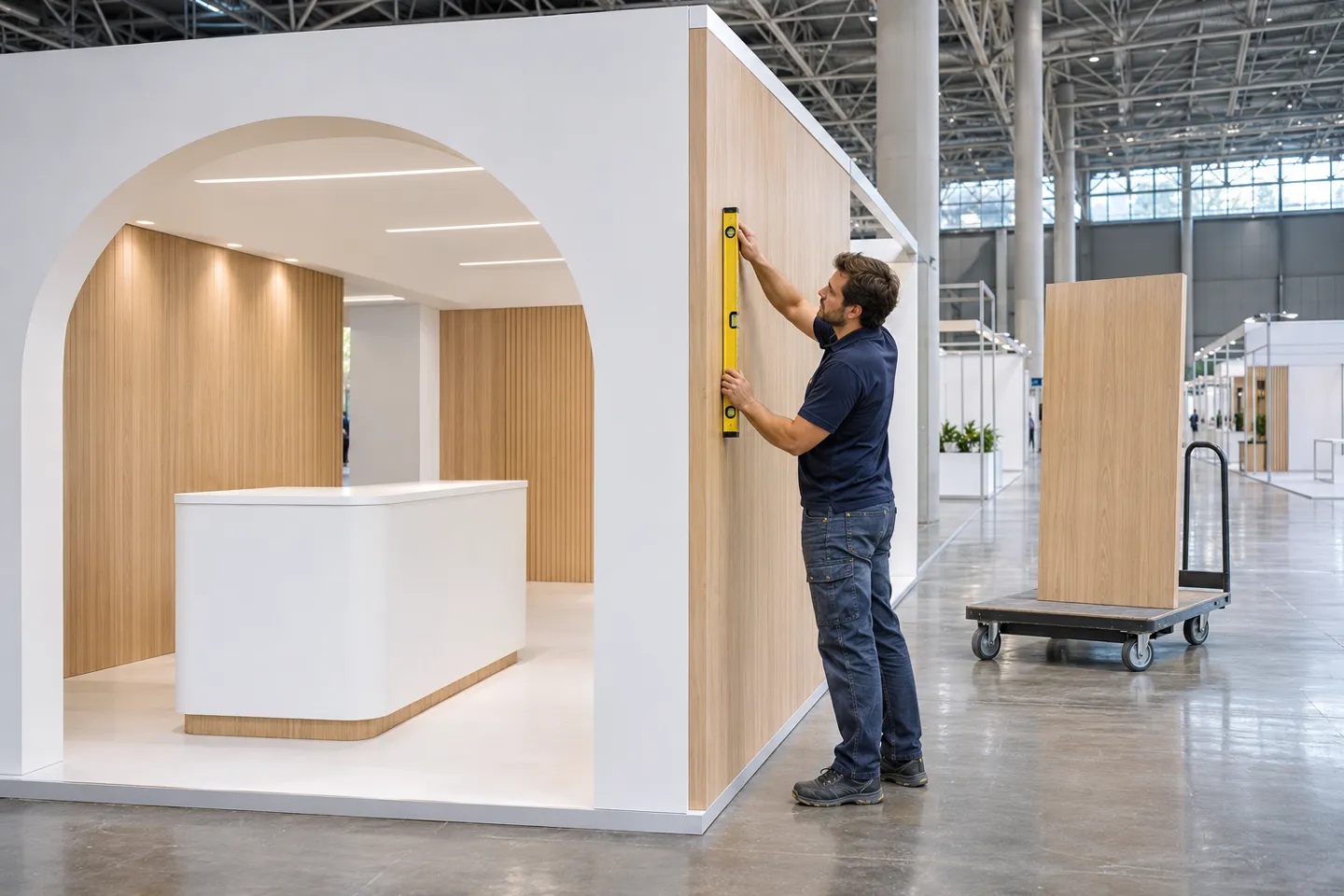
 English
 Spanish
 German
 French
 Italian
 Korean
 Chinese