
What Booth Traffic Actually Measures
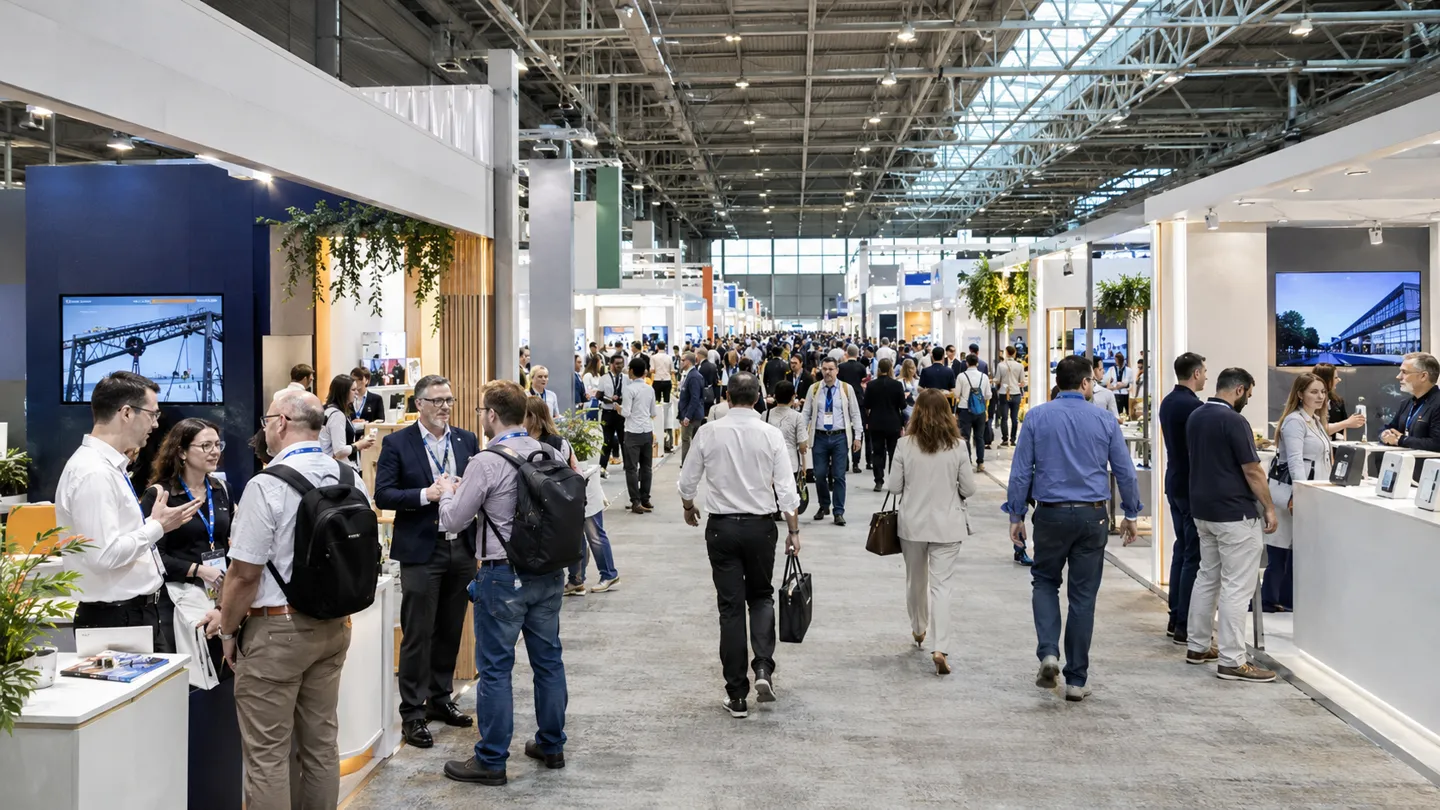
An attendee rounds the end of your aisle, and for the next two to five seconds your booth has exactly one job: be understood from ten feet away. That decision window is brutal because it happens before a word is spoken. Either something about your space earns a second look, or the attendee is already looking at the row across the aisle.
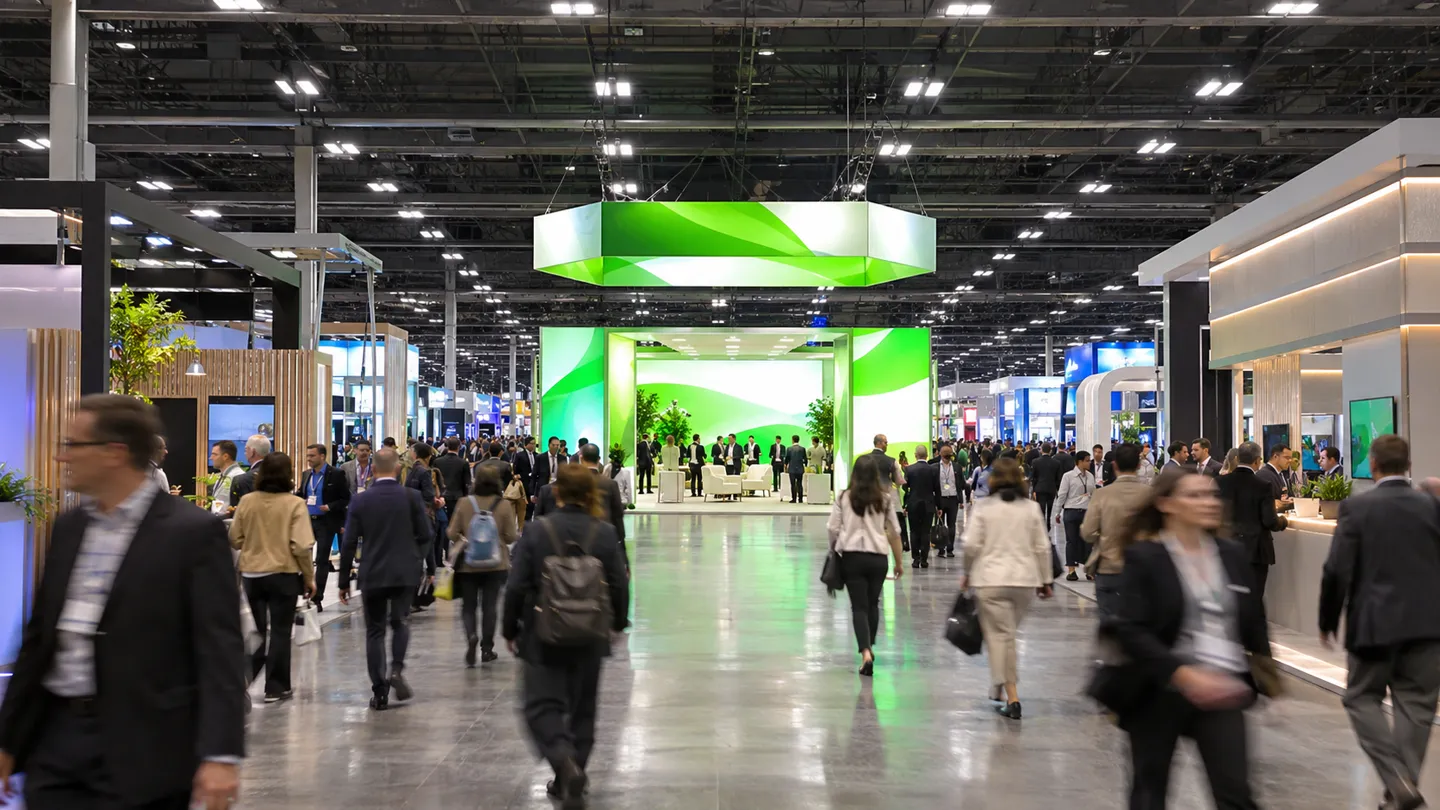
“Booth traffic” is the phrase exhibitors use for that flow of people, but the number behind it is not a single figure. It is a stack of measurements: how many people walk past, how many slow down, how many actually step in, and how long they stay once they do. A booth can win one layer and lose the others. Five hundred walk-bys with six real conversations is a different result than eighty walk-bys with twenty. The gap between those two outcomes is where exhibit budgets are actually won or lost.
One quick clarification before going further: this article is about trade show floor traffic. If you arrived here looking for the traffic-camera photo project that happens to share the phrase, this will be a disappointing detour, and you can stop reading now. Everyone else, the reason this stack of numbers deserves your attention is simple. A booth that nobody stops at turns into a very expensive place to stand, and the furniture was never the point.
Every attendee who passes your space moves through the same four stages whether you planned for them or not: they see you, or they don’t. They stop, or they don’t. Their information gets captured, or it doesn’t. And somebody follows up, or nobody does. Each stage has its own owner on your team, its own failure mode, and its own fix. The rest of this article walks those stages in order. It ends with the decision most exhibitors leave too late: what your booth itself, and the partner who builds it, has to deliver for any of those stages to work.
Getting Seen: Pre-Show Presence and On-Floor Visibility
The counterintuitive fact about booth traffic is that most of it is decided before the doors open. CEIR research consistently finds that up to 76% of attendees arrive with a pre-set list of booths they plan to visit (CEIR via ISC, 2025). Read that number again before you spend a dollar on floor tactics. Three out of four people walking the hall already know part of their route, and the only question is whether your booth is on their list.
Start With the Attendee List, Not the Aisle
Getting on that list is unglamorous work. Email your customer and prospect lists with your booth number and a specific reason to show up. A demo they can only see live, or a new release shown for the first time, both work. Post on social with the event hashtag and tag the organizer so your posts surface in attendee feeds. Fill out the exhibitor directory and the show app completely, because plenty of attendees build their route from that listing alone. And if the show supports it, book appointments in advance: ten guaranteed conversations beat two hundred random walk-bys when you count what actually comes home in CRM.
The payoff for this work is measured, not hypothetical. CEIR’s research on exhibitor success puts pre-show outreach at 46% more booth visits compared to relying on walk-up traffic alone (CEIR via Makai, 2026). Pre-planned visits also convert better, since the attendee who sought you out has already decided you are worth their time.
Buy Exposure Only When You Need Walk-Bys
Position still matters, but it matters less than the floor plan salesman says. Corners, entrance-adjacent spots, and spaces near food courts all get more eyes, because those are where attendee flow concentrates and slows. At major shows those spots are allocated early, often 9 to 12 months ahead, to legacy exhibitors and early committers. One zero-cost detail applies when two comparable spots are on the table: attendees tend to turn right when entering a hall, the same way shoppers do. Favor the right side of the main entrance flow.
Here is the honest trade-off that two respected sources frame in opposite ways. Venue guidance tells exhibitors to position in high-traffic areas (Greater Tacoma Convention Center, 2025). One exhibit house notes, in turn, that research has never found a reliable link between floor position and overall show success (ShowReady, 2026). Both are right about different situations. Placement buys exposure to natural traffic patterns. If your pre-show outreach has done its job, an interior position with a stronger booth usually performs just as well, at a lower line item. If you are depending on walk-by discovery, visibility is the product you are buying, so pay for it deliberately.
Make the Three-Second Read Physically Possible
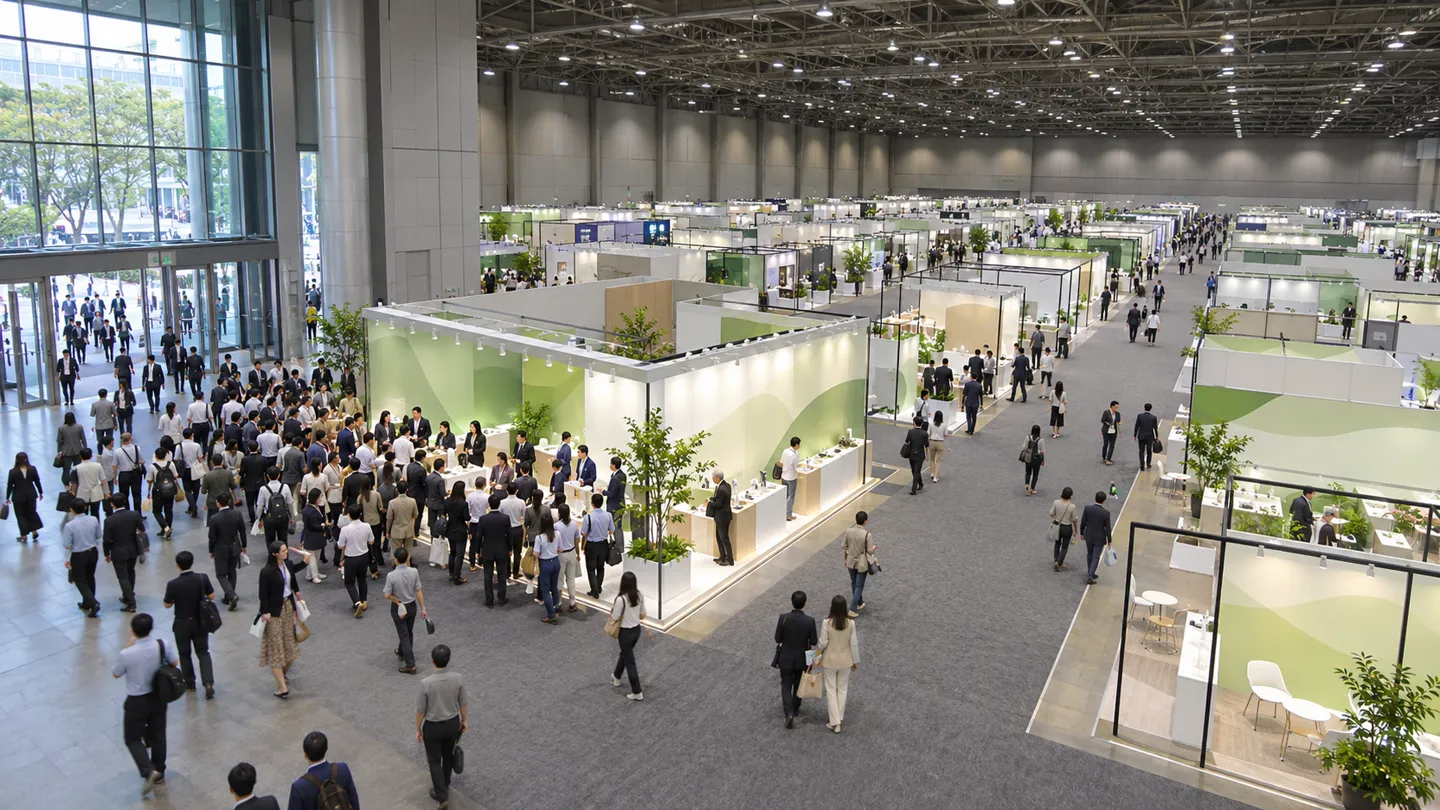
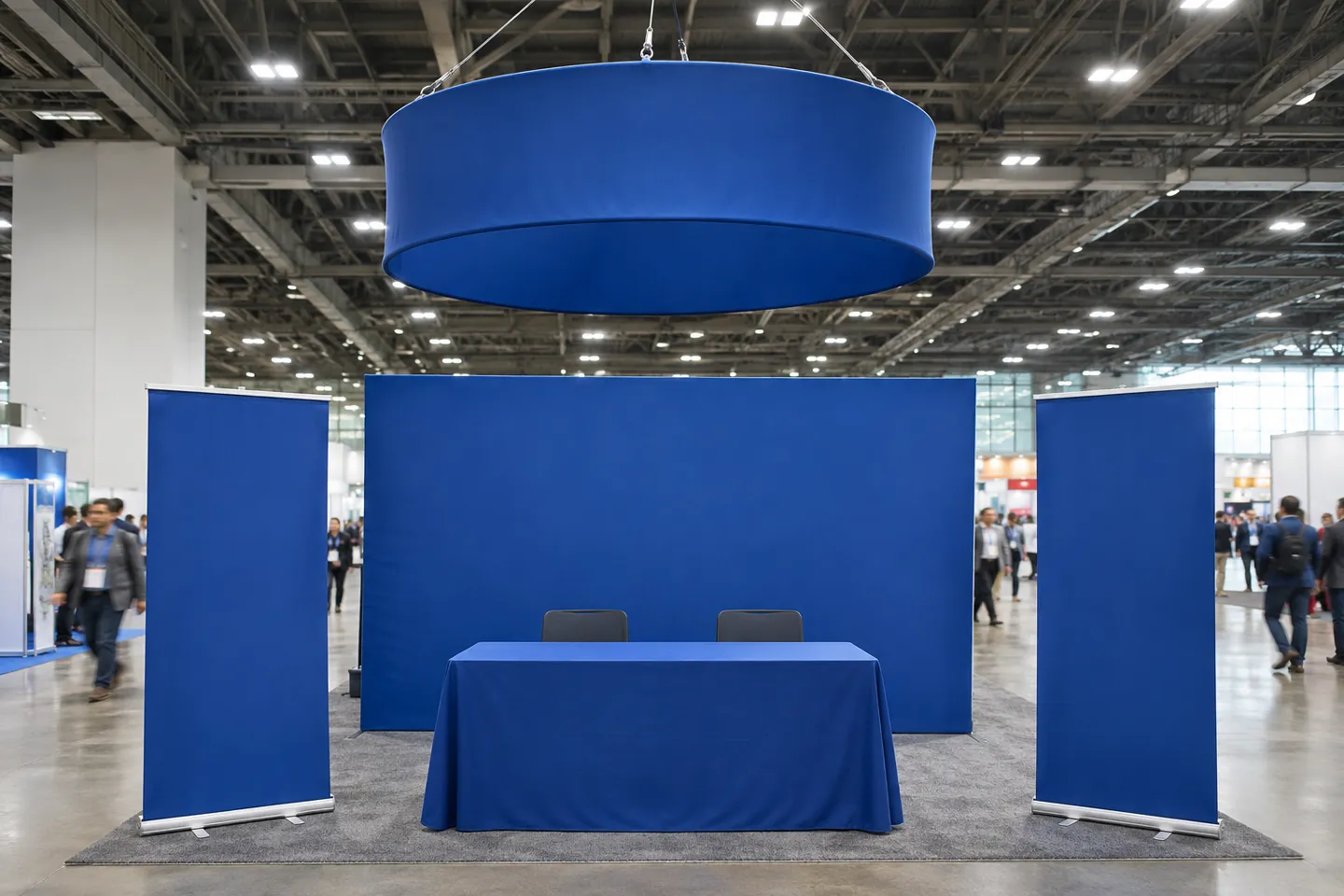
Whatever position you end up in, the same mechanical rules decide whether the passing eyes turn into stops. One headline, ten words or fewer, leading with the problem you solve rather than your company name. Height, because a hanging sign or a tower stays visible three rows down the aisle while eye-level panels disappear behind crowds. Lighting contrast, because a backlit wall reads from farther away than anything lit by hall ambient. And an open front, because layout does more work than graphics. A counter parked across your entrance feels protective from inside the booth and reads as a barrier from the aisle. Exhibit-house rule of thumb puts the entry loss from a blocked front near half. Keep five feet of open floor at the front and push seating and deep conversations toward the back.
Attraction Levers: When They Pay Off and When They Waste Money
| Lever | Worth investing when | Waste of money when | Action to verify first |
|---|---|---|---|
| Pre-show outreach | Every show, budget small or large | Attendee list is outdated or unknown | Pull last year’s badge data or the organizer’s attendee profile |
| Position upgrade | You depend on walk-by discovery, or the show is new to your buyers | Pre-show appointments already fill your calendar | Ask the organizer for a floor plan with traffic patterns |
| Height and signage | Your row is visually crowded, or competitors have hanging signs | Hall ceilings are low, or rigging is banned | Confirm rigging rules and deadlines with the organizer |
| Lighting and open front | Neighboring booths are dim or barricaded by counters | Your aisle already has strong ambient design | Walk your last show’s photos and count blocked fronts |
The Boundary Above All Four Levers
Pick the wrong show and none of the levers matter: attraction cannot manufacture the right audience. Verify the attendee list matches your buyers before optimizing anything else.
Giving Attendees a Reason to Stop
Visibility earns a glance. A reason to stop is a different problem, and it has a different solution. At one recent show, a booth spent the morning as the deadest spot on its row. The product never changed and neither did the booth. The team simply stopped waiting for people to walk up and started running live demos, and within fifteen minutes the same space was packed (r/tradeshows, 2026). That is the entire thesis of this section in one sentence: activity draws people, stillness clears them out.
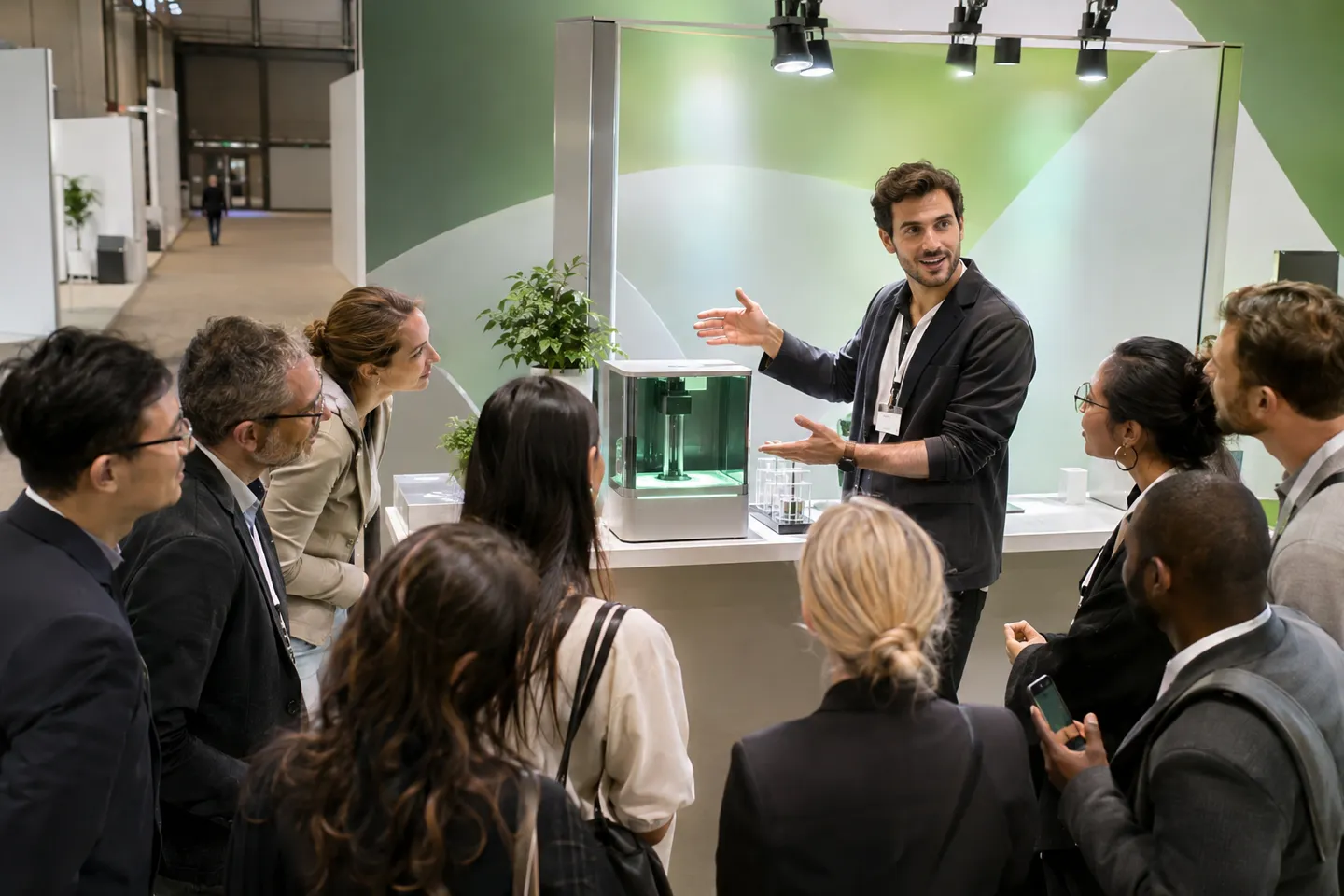
Demos work best when they are scheduled, not improvised. Run them at fixed times, on the half hour for example, and promote those times in pre-show emails and on booth signage so attendees can plan around them. A scheduled demo is a small event with an audience; a constant demo is wallpaper. The practical prerequisites matter as much as the schedule: power at the demo station, floor space for a small crowd, and a way to be heard over hall noise.
The Fifteen-Minute Flip
Same booth, same product: a live demo turned the deadest spot on its row into a full booth in fifteen minutes.
r/tradeshows, thread: What actually drove foot traffic to our booth
Staffing is the other half of the stop. The best setup in the hall cannot compensate for two people standing behind a counter checking their phones. Position one person at the front edge of the space, slightly into the aisle, opening with questions that start with the attendee rather than the product. For a 10×10 booth, two staff on the floor is the sweet spot; more than three makes the space feel full before a visitor ever steps in.
Giveaways belong to the same logic: the item is a conversation starter, not a pile on the counter. Bowl freebies get grabbed and forgotten. Items handed over after a badge scan, a demo, or one qualifying question reach people you can actually follow up with. Hold stock back for the second and third day of the show, when the floor has been walked and the casual traffic thins out.
Giveaway Tiers: Match the Ask to the Item
| Tier | Who gets it | What you ask first | Quantity guide |
|---|---|---|---|
| Basic | Any visitor who stops | A stop and a hello | Roughly a third to half of expected attendance |
| Mid | Demo or quiz participants | A completed demo or demo booking | Enough for peak-day demo counts |
| Premium | Qualified prospects | A badge scan with a note, or a booked follow-up meeting | A few dozen at most, plus raffle prizes |
Comfort pulls people in during the hours tactics miss. Four to six seats, a charging station, and coffee in the mid-afternoon slump turn your booth into the resting spot people remember. LED walls and interactive screens keep a message playing while visitors recharge. The boundary to respect here is subtle but expensive. Games, raffles, and free drinks reliably build a crowd, and a crowd is not the same thing as a queue of buyers. If the goal is qualified conversations, reward interaction rather than arrival, and remember that a demo plan without power and floor space is not a plan. It is a wish.
Turning Stops into Qualified Leads
A stopped visitor is potential energy. Capture is what converts it, and capture is where enormous losses happen because the failure is invisible. A great conversation that nobody wrote down is a lead nobody will ever follow.
Capture Without Friction
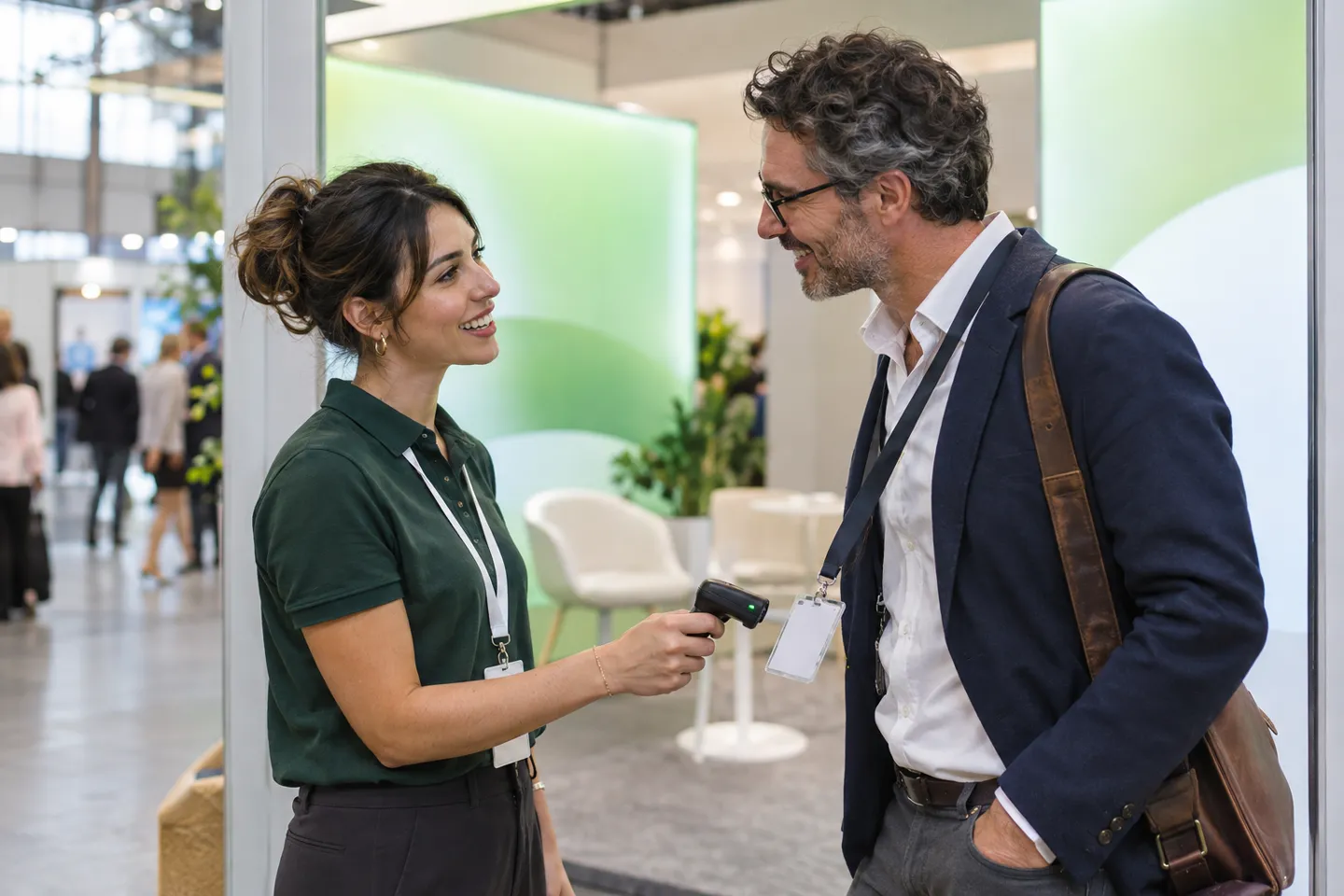
The mechanics are simple and constantly botched. Badge scan first, because it takes seconds and never interrupts the conversation. Then a one-line note within thirty seconds, while the conversation is still fresh, recording what this specific person cared about. Forty scans with notes is a real result; forty bare scans is a stack of phone numbers. Watch your forms, too. Sales threads are full of the same complaint about lead capture apps that demand a screen full of required fields while the attendee stands there awkwardly (r/sales, 2024). Four required fields is plenty. And agree on one definition of “qualified” before the show so three different staff members do not tag the same conversation three different ways.
Set Targets You Can Actually Defend
Targets make the difference between a result and a feeling. A qualified visitor, in plain terms: right title, budget authority, and a purchase timeline inside six months. On how many leads to expect, one exhibit house’s published planning guide suggests roughly one marketing-qualified lead per six to eight real conversations (ShowReady, 2026). Treat that as a planning input rather than a promise. The right number varies more by industry than vendors admit.
Daily Booth Traffic Targets: One Planning Reference
| Booth size | Event scale | Daily visitors (guide) | Qualified leads per day (guide) |
|---|---|---|---|
| 10×10 | Regional, 2,000-5,000 attendees | 50-100 | 5-12 |
| 10×20 | Mid-size, 5,000-20,000 attendees | 80-200 | 10-25 |
| 20×30 and larger | Major, 20,000+ attendees | 200-500 | 30-60 |
The table above is one exhibit house’s published planning guide (ShowReady, 2026), offered here as a sanity check rather than a standard. Long-cycle industries, industrial equipment and medical devices being the obvious examples, should expect the lead column to run lower and the deal timeline to run longer. Do not compare your result at a regional show against someone’s number from a flagship event; the audiences are not the same population.
Choose the Crowd You Actually Want
The loudest truth in this whole topic is that traffic volume and traffic quality pull in opposite directions. Raffles, free alcohol, and crowd-bait of every kind inflate the walk-by and stop numbers while thinning out the share of visitors who can ever buy anything. The fix is arithmetic, not philosophy: divide your total giveaway spend by the conversations your team scored as warm or hot. A $2,400 spend that produces sixty real conversations costs $40 each (Trade Show Displays US, 2026). Track that number show over show and let it, not the raw badge count, decide which tactics survive next year. Small budget points you toward quality; a brand-awareness play can justify coverage; just decide which game you are playing before the floor opens, not standing on it.
Whichever game you pick, the booth has to be ready to play it: Aplus Expo answers inquiries within 12 hours and sends a free 3D design with an itemized quote within 48.
Get Your Free 3D DesignThe 48-Hour Window and the Funnel Audit
Everything above happens at the show. The stage that deletes the most value comes right after it. A badge scan that sits untouched for two weeks has already lost most of its worth: the attendee has flown home, cleared their inbox, and forgotten which vendor said what. Send follow-up within 24 to 48 hours of the show ending, and reference the note your team took in the booth rather than a template. For multi-day shows, start the night the relevant conversation happened. Personal beats fast, but fast and personal beats everything.

Once the follow-up is out, hold the post-show review within a week or two while everyone still remembers the floor. The audit is four questions, asked in order:
How many people walked past versus walked in?
Of those who walked in, how many became real conversations?
How many conversations were scanned with a note?
How many scanned leads got a personal follow-up?
The stage with the biggest drop is the one to fix before buying anything new.
Most exhibitors find exactly one stage leaking far worse than the rest, and it is more often capture or follow-up than attraction. Fixing the one leaky stage usually returns more than a booth redesign would. Measurement tools exist for every stage, people counters, heat maps, and CRM tags among them, but a 10×10 team should fix process before buying tooling.
And when the walk-by count looked great but the pipeline looks thin, resist the instinct to blame the booth; the leak is almost always one stage downstream.
Trust Check
Most circulating statistics in this topic, three-second windows, lighting uplift percentages, position studies, have no traceable source behind them. Before repeating any number to your CFO, ask who measured it and how.
When It’s the Booth: What to Demand from a Partner
If your audit keeps pointing upstream, at stops that never happened or a first morning lost to setup, the problem may not be your marketing at all. A booth that cannot host a demo cannot buy traffic with tactics. Every tactic in this article has a physical prerequisite, and the place those prerequisites get settled is the booth contract, not the show floor.
The Prerequisites Your Tactics Quietly Depend On
A live demo needs a power order placed with the show, floor space reserved for a small crowd, and a schedule. A hanging sign needs rigging approval and a submission deadline met weeks in advance. Tiered giveaways need storage at the booth. LED walls and interactive screens need AV support and someone on call when they misbehave. None of these line items appear on a rendering, and all of them sink tactics when they are missing. Union-city shows add a twist worth knowing in advance. Local rules require union labor for much of the on-site work and can add 25-30% to build costs. The more assembly that happens in a factory beforehand, the fewer expensive billed hours you buy on site.
Three Acceptance Tests That Matter More Than Renders
Most exhibitors pick a booth partner the way they pick a restaurant, by how good the brochure photos look. Renders do matter; they are just the wrong first filter. Judge candidates on readiness instead.
Test 1, Demonstrability: power, demo space, and a demo schedule appear on the drawings, not in an email thread at the show.
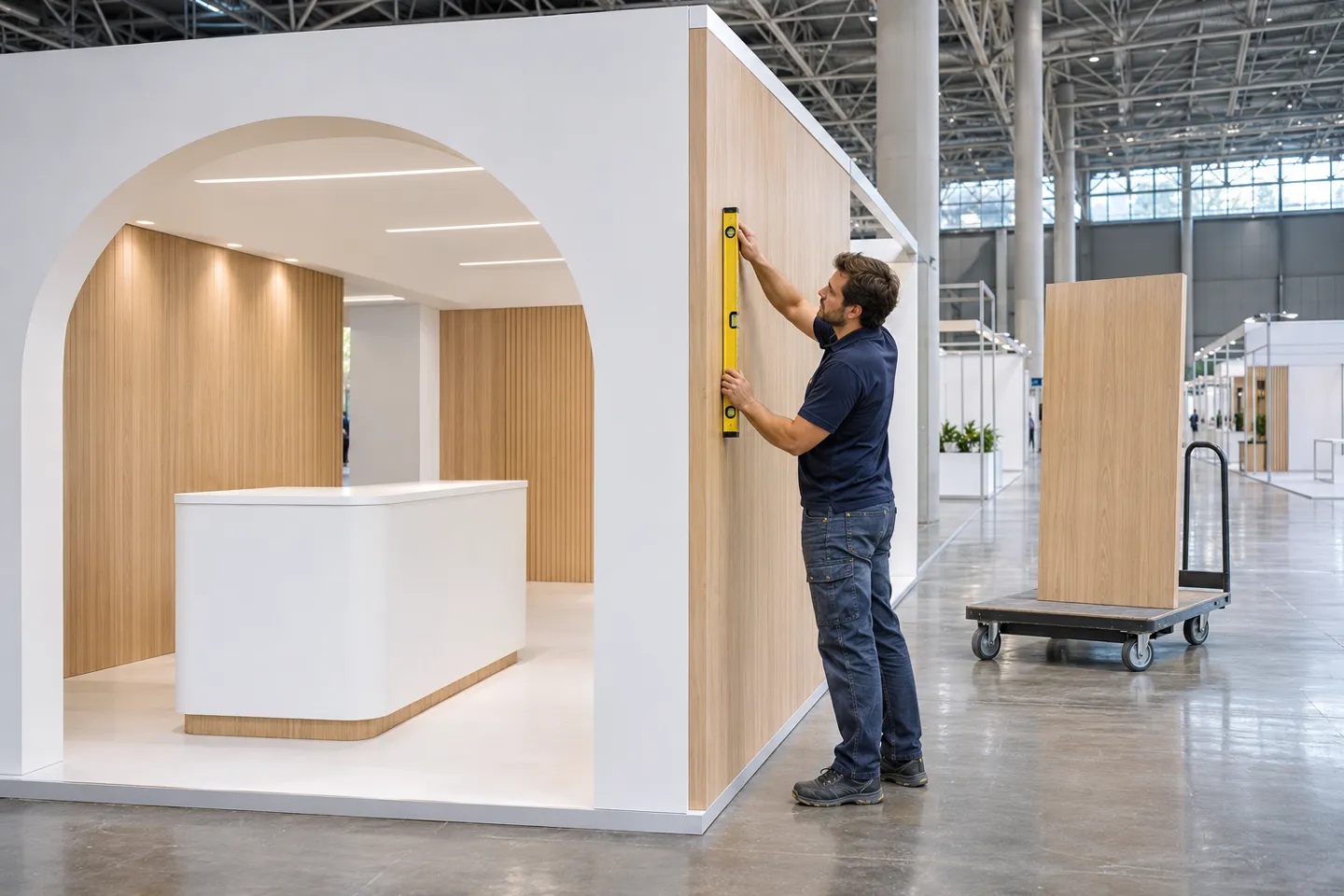
Test 2, Day-one readiness: the booth is 100% pre-built in a factory with photo or video sign-off before it ships, arrives the day before doors open, and assembles in hours.
Test 3, Failure backup: a named project manager with a committed response time, graphics reprinting in-house the same day, and every bill settled before the show closes.
Rate a supplier less on the renders and more on how they handle things going wrong at 6am; on a live floor, something always does. That is how one exhibitor-industry veteran put the standard, in a thread of war stories from real shows (r/tradeshows, 2026). The same logic argues for trying a tactic before you buy it permanently. Rental booths built to the same custom standard let you test a traffic playbook, run the audit, and then commit to owned assets once the numbers justify them.
That readiness bar is not a hypothetical standard; it is how we work at Aplus Expo. We answer inquiries within 12 hours and send a free 3D design with an itemized quote within 48. Every booth is pre-built in our Las Vegas factory with photos for your approval, then delivered the day before doors open, so show-day assembly takes hours, not days. When something goes wrong at 8am, our project managers are 30 minutes from the hall and our own print shop reprints graphics the same day. Every bill, including show-organizer charges, is settled before the show closes, because you should be done with invoices the moment you are done with the show. If you want a partner judged on readiness rather than renders, start with our custom booth design and build service.
Start with a Free 3D Design and an Itemized Quote
Aplus Expo pre-builds every booth in its Las Vegas factory, delivers the day before doors open, and settles every bill before the show closes.
Get Your Free Booth QuoteReferences
- Center for Exhibition Industry Research, cited by American Heart Association ISC Industry Resources. “Why Booth Promotion Matters and How to Do It Effectively.” 2025. https://isc.hub.heart.org/industry-resources/press-release/22951740/why-booth-promotion-matters-and-how-to-do-it-effectively
- Greater Tacoma Convention Center. “Trade Show Booth Ideas: Five Designs That Drive Traffic and Conversions.” 2025. https://tacomaconventioncenter.org/trade-show-booth-ideas-five-designs-that-drive-traffic-and-conversions
- r/tradeshows. “What Actually Drove Foot Traffic to Our Booth Outside a Convention Center.” Reddit, 2026. https://www.reddit.com/r/tradeshows/comments/1pnsqwp/what_actually_drove_foot_traffic_to_our_booth/
- r/tradeshows. “Stories from the Show Floor.” Reddit, 2026. https://www.reddit.com/r/tradeshows/comments/1vagrzw/stories_from_the_show_floor/
- r/sales. “Trade Shows: How Can We Make Our Booth More Successful?” Reddit, 2024. https://www.reddit.com/r/sales/comments/1bdon3r/trade_shows_how_can_we_make_our_booth_more/
 English
 Spanish
 German
 French
 Italian
 Korean
 Chinese