
What “Trade Show Booth Materials” Actually Covers
One clarification before anything else. If you searched for booth “materials” hoping for a list of brochures, giveaways, and banner pens, that is a different topic: marketing collateral. This article is about the physical stuff your booth is built from, which is what exhibitors usually mean when the question comes up while planning a build.
The second thing to unlearn: booth materials are not one material. A finished booth is a system of four roles, and each role pulls from a different shelf.
The four roles of booth materials
| 角色 | Common materials | What it determines |
|---|---|---|
| Structure and walls | wood fabrication, aluminum extrusion, laminate panels, tension fabric, pop-up frames | the booth’s shape, weight, and what the venue’s fire marshal will ask about |
| 圖形 | dye-sublimation fabric, SEG (silicone-edge graphics), vinyl, rigid UV-printed panels, backlit film | how your brand reads from ten feet away and how fast graphics can be swapped |
| 地板 | interlocking foam tiles, wood-look tiles, rollable vinyl | how your team’s feet feel on day three and how fast load-in goes |
| Furnishing and light | counters, kiosks, towers, LED fixtures, AV mounts | where visitors stop, sit, and talk |
Across those four roles you will meet the same short list of material families: wood products (MDF, plywood, laminate), metals (aluminum extrusion, steel), textiles (tension fabric, SEG textiles), plastics (acrylic, polycarbonate), composites, even honeycomb cardboard and foam. Most generic guides stop at rating those families. That rating is the least useful part of the decision, because the same fabric or the same aluminum behaves completely differently depending on what you build with it.
That is the question this article answers first: not “which material is best,” but “which build system are you in,” because the system decides the materials, the rules, and the bill.
The System Ladder: From Portable Kits to Modular Aluminum
Exhibit builds sort into a ladder of systems. Each rung has its own material palette, its own lifespan, and its own economics. Find your rung before you argue about materials.
Portable Kit Systems (the rung most exhibitors start on) ⭐
Walk any US show floor and you are surrounded by four kit building blocks. Pipe and drape is the venue’s default wall: steel posts and draped fabric that define your space until you replace it. Pop-up displays use a collapsible aluminum or fiberglass frame with magnetic panel attachments. Tension fabric systems stretch a dye-sublimation printed sock over a slim frame, and SEG kits hold a printed liner inside a frame channel with a silicone strip. Underfoot, interlocking foam floor tiles click together like puzzle pieces, including wood-look prints for a warmer finish.
The honest lifespan question gets answered by the materials themselves. A pop-up frame survives years of use; its printed panels are the weak point, picking up wrinkles and edge chips after a handful of setups. Tension fabric is light and cheap to ship, but a sock that has been stuffed into a bag a dozen times starts to sag at the corners. Interlocking foam tiles are comfortable and forgiving, yet corners scuff where carts cross them.
So the kit rung has a real boundary, not just a price tag. Kits win when you exhibit once or twice a year, your booth footprint never changes, and your graphics do not need seasonal swaps. If any of those three stops being true, you have outgrown the rung, and the next one exists precisely for that moment.
Modular Aluminum Systems (the upgrade path)
Modular systems are built from aluminum extrusion: structural profiles that bolt and clamp into frames you can reconfigure. Fabric graphics print by dye-sublimation and finish as SEG panels, so they slide into the frame channel and can be reprinted and swapped without touching the structure. Around the frame you add components: reception counters, kiosk stands, monitor mounts, shelving, lighting. Display suppliers describe exactly this combination, lightweight aluminum construction with SEG and dye-sub fabric graphics, as the core of modern modular displays.
The economics are the point. You buy the structure once, then refresh graphics by season or campaign. Weight stays low, which keeps shipping and handling cheap, and reconfiguration absorbs booth-size changes that would strand a kit.
Two rungs further up sit hard-wall construction and full custom fabrication, where wood and aluminum get mixed to order; those are covered in the custom-build section below. And for completeness: honeycomb cardboard structures exist as ultra-light one-off builds for eco-themed activations, used once and recycled.
System ladder at a glance
| System | Core materials | Realistic lifespan | Fits when |
|---|---|---|---|
| Pipe and drape | venue posts plus draped fabric | you rent it by default, never yours, purely a backdrop | leave it only if a backdrop is all you need |
| Pop-up kit | collapsible frame, magnetic or channel-attached panels, foam tiles | 3-5 shows before panels show age | 1-2 shows a year, fixed footprint, stable graphics |
| Tension fabric and SEG kit | printed fabric sock or SEG liner on slim frame | fabric refreshes cheaply, frame lasts years | frequent graphic changes at kit-level budgets |
| Modular aluminum | extrusion frames plus SEG fabric graphics and components | structure lasts years, reconfigures | growing exhibitors, changing footprints, seasonal campaigns |
Kit or Custom? The First Real Decision
Four variables decide your rung, and none of them is “which material is best.” How many shows per year you attend. Whether your booth footprint is fixed or changes show to show. How often your graphics need to change. And whether you need people to do something in the booth, sit down, demo a machine, queue for a screening, beyond looking at a wall.
Materials are an effect purchase.
Now the trend talk you will hear from design-forward builders: that materials are “not a procurement question, it’s a brand strategy question.” It is a good line, and it is half true. What attendees actually remember is the overall effect: how the light falls, whether the space feels open, whether someone greeted them. They do not remember your substrate. Materials are an effect purchase. You are buying how the booth reads from ten feet away and how it holds up for three show days, not an inventory of premium components.
The same honesty applies to sustainability. Recycled and eco-friendly material options are real and worth asking for, but most custom booths are built for a single show and dismantled at the end of it. If your company has ESG targets, choosing certified recyclable or reused materials is a legitimate reason to pay a little more. If you are choosing them expecting savings or extra durability, you will be disappointed.
Upgrade signals: time to leave the kit rung?
Your booth size or shape changed in the last two shows.
You exhibit 3+ times a year.
Graphics change every season or campaign.
You need functional zones: meetings, demos, storage, screens.
Marketing wants a structure the brand owns as an asset.
Three or more checks means the custom tier is your tier. The next section is the one to read with a highlighter.
Specifying Custom-Build Materials: Structure, Fire Code, and Landed Cost
Custom fabrication changes the questions. You are no longer choosing a product off a shelf; you are writing a spec that a factory will build to, a venue will inspect, and your finance team will audit. Four steps, in order.
Choosing the Structural Palette
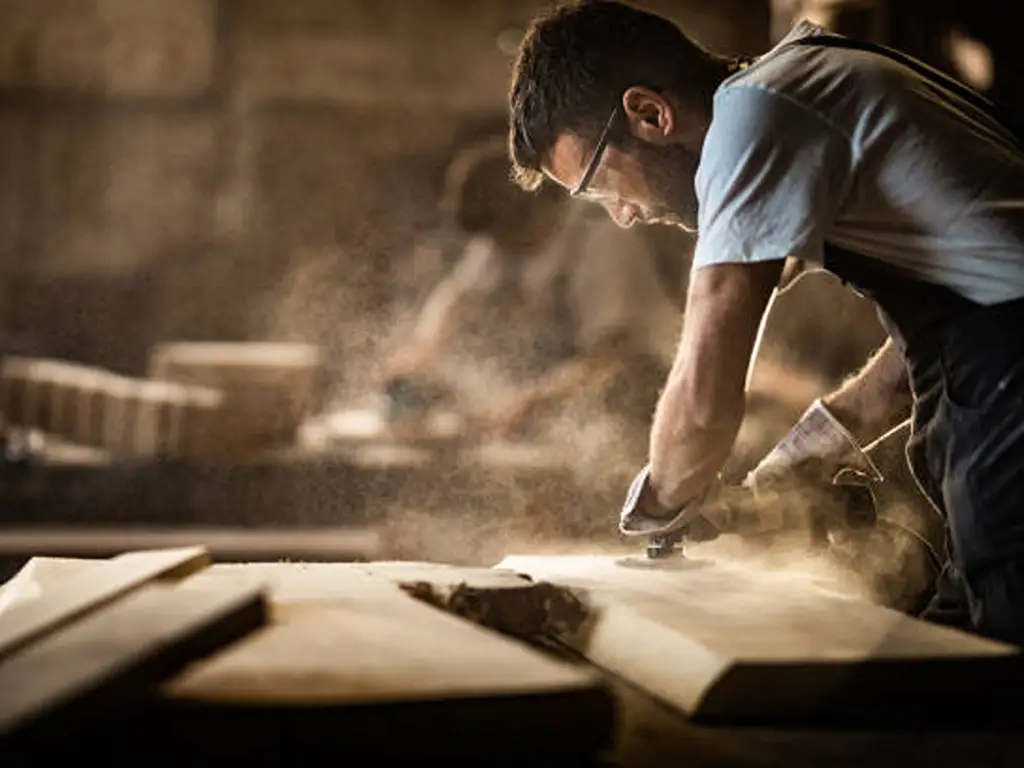
Wood and aluminum are not competitors; they are specialists. Custom wood fabrication owns the sculpted moments: curved walls, textured facades, meeting nooks, anything where the brand needs a physical shape no extrusion can bend to. It is heavy, and weight costs money on every mile and every hour of setup. Aluminum extrusion owns the precision jobs: hanging frames, towers, clean modern lines, and any structure you want to reconfigure next season. It costs more per pound than commodity wood in fabrication, but it is dramatically lighter and reusable. Most well-run custom booths are hybrids: wood where the brand shows, aluminum where the structure works.
Hard-wall construction is the European-style cousin: solid laminate or composite panels on aluminum or steel frames that read as a permanent architectured space, a deliberate contrast to the open-back pipe-and-drape norm at US venues. At the top of the ladder, two-story booths and large truss towers are structural engineering projects first and material choices second: load calculations and venue structural approval come before any finish discussion.
Pass Fire Compliance Before You Fall in Love with a Design
This is the part of booth materials that almost never makes the comparison guides, and it is the only part that can empty your booth overnight. US venues require flame-retardant certification for banners, drapes, signs, and decorative materials. Fabric components need an NFPA 701 certification; vinyl needs CPAI-84. General contractor fire rules require the label or certificate to travel with the material, and if it cannot be shown, the material gets treated on-site or rejected. Wood has its own numeric line: GES fire rules require wood construction to be a nominal thickness of more than a quarter inch (6 mm) or be treated by a flame-retardant specialist.
Venue fire code
Wood panels thinner than ¼ inch (6 mm) must be flameproofed by a specialist before they enter the hall.
This rule is not on your quote. It is in every US venue fire guide.
Write that sentence into your project vocabulary: the fire code is a materials spec, set before the design is final, not a surprise discovered at load-in. An exhibit, or any part of it, that fails code can be ordered dismantled and removed from the show floor (Exhibitor Magazine, n.d.).
The Landed-Cost Math and Your Acceptance Checklist
Material price is not material cost. Two venue-side charges convert pounds into dollars. The first is drayage: the general contractor’s material-handling fee, billed by weight in hundredweight (CWT) units, with your shipment weight rounded up to the next hundred pounds, so 301 pounds bills as 4 CWT (Exhibitor Magazine, n.d.). Rates typically run $80 to $180 per CWT depending on the venue, and Las Vegas and Chicago sit at the high end. The second is show-site labor. Installation and dismantle crews bill by the hour, averaging about $140 per hour on straight time and $205 blended with overtime. Across a full project, I&D labor can consume up to half of an exhibitor’s total order. A material choice that adds two hundred pounds and a day of carpentry is a choice that spends money long after the invoice for the materials themselves.
So compare quotes the way seasoned exhibitors tell each other to: line by line, design, fabrication, graphics, shipping, drayage, installation labor, and compare the sum, not any single number (r/tradeshows, 2026).
Then hold the finished booth to an acceptance list.
The acceptance checklist: what to demand before the truck leaves
Flame-retardant certificates for every fabric and vinyl component, included in the shipment.
Pre-build photos of the booth stood up complete in the factory, so paint, seams, and graphics get verified while fixes are still cheap.
Paint coverage you can specify, multiple coats over primer, nothing that goes translucent under hall lighting.
Edge banding and closed seams on every panel a visitor can touch.
A graphic medium matched to its job, dye-sub fabric for large soft surfaces, rigid UV panels for crisp detail, backlit film where the light box lives.
Custom material decisions and their boundaries
| Material approach | Fits when | Fails when | Confirm before signing |
|---|---|---|---|
| Custom wood fabrication | sculpted brand forms, premium textures, one-off shapes | weight drives drayage and labor hours; thin panels violate the 6 mm rule untreated | fire-treatment spec for panels under 6 mm, weight estimate in writing, paint coats specified |
| Aluminum modular plus SEG | reconfigurable structures, frequent graphic swaps, hanging elements | sculpted organic forms are not its strength | extrusion spec, SEG channel compatibility, reconfiguration plan |
| Hard wall | solid architectured walls, private meeting cores | heaviest option; needs structural approval and longer setup | panel material and finish spec, venue structural sign-off, labor estimate for assembly |
| Two-story and truss towers | maximum presence, major capacity | engineering review, load calc, and approval are long-lead items | structural engineer documents, venue approval timeline, rigging points |
That list is enforceable only when the answer to every line is yes before the truck leaves, and getting those yeses is mostly a question of who builds the booth. A builder who controls fabrication, printing, and pre-build under one roof can answer each line with a document rather than a promise. We build every custom booth this way at Aplus Expo. Structure is wood or aluminum, chosen for the design rather than from a parts catalog, and graphics run the full range: vinyl, fabric, CNC relief, backlit lettering, or UV crystal, whatever the design calls for. Every booth is pre-built in our Las Vegas factory to 80-90% completion and photographed for your approval. Standard production runs 2-3 days, and our own print shop reprints a graphic damaged on-site the same day. You can see how our custom booth fabrication works, starting from your own design.
What to Demand from a Builder’s Material Operation
Everything above compresses into five questions you can ask any builder, no brand names required.
First: do they fabricate in their own facility, or does the work pass through subcontractors? Every handoff in the chain is a place where paint specs, panel thickness, and cert paperwork can silently degrade. Second: is there a pre-build mechanism, where the booth is stood up complete in the factory and photographed before shipping? This single practice catches most defects while they are still cheap. Third: do they print graphics in-house? An own print shop means a wrinkled banner or a late copy change is a same-day fix instead of a freight wait. Fourth: how local is their material supply? A builder who buys lumber and panels locally can restock the same day, which is what makes a genuine rush order physically possible. Fifth: how disciplined is their paperwork, flame certificates, structural drawings, itemized quotes, arriving as standard deliverables rather than on request?
A builder who answers all five well has, in effect, already passed your acceptance checklist before the show. The next question is what happens when any of it goes wrong anyway.
Aplus Expo answers all five with documents instead of promises, starting with a free 3D design and an itemized quote within 48 hours.
Get Your Free 3D DesignHow Material Plans Fail (and the Check That Catches Each One)
Material failures at shows are rarely exotic. They are the same five patterns, and each has a check that catches it while it is still cheap.
Compliance failure comes first because it is the most expensive. The scene repeats every season: a fire marshal asks for the flame certificate on a fabric wall, nobody can produce it, and the exhibit, or the offending part of it, can be ordered dismantled and removed from the show floor (Exhibitor Magazine, n.d.).
Most expensive failure
Failing a fire-code inspection on-site. Check: require flame certificates (NFPA 701 fabric / CPAI-84 vinyl) as contract deliverables, and verify panel thickness against the 6 mm rule at the drawing stage, not at load-in.
Cost failure arrives as the invoice you did not model. Drayage is billed per hundredweight with weight rounded up (Exhibitor Magazine, n.d.), so “a bit heavier” is literally a billing category. Check: ask for the shipment weight and a drayage estimate inside the quote, not after the show.
Logistics failure happens between the factory and the hall. Booths trucked a thousand-plus miles arrive battered when crating is casual. Check: confirm wood-case crating for long hauls and a ship date at least a week ahead of the show.
Schedule failure is subtler: a rushed build quietly drops paint coats or dry time, and the finish looks tired under hall lights. Check: write the finish process, primer plus coats, into the contract, and ask directly what the builder’s shortest realistic production window is.
Show-floor failure is the 8 a.m. damaged graphic. Check: confirm before the show that your builder can reprint and replace graphics on-site the same day.
The Booth Materials Business Case: Buy, Rent, or Walk Away
In business terms, most custom booths are used for one show, which makes the material decision a use-model decision. If you exhibit once or twice a year, or your footprint moves, owning a custom structure is a storage bill attached to a depreciating asset. A custom rental flips the model: the material configuration is built for the specific show, you pay for use rather than ownership, and someone else warehouses the structure between your shows. Buying materials into an owned booth pays when you exhibit four or more times a year at a fixed footprint and reuse the structure while only refreshing graphics.
Buy or rent the structure
| Your pattern | Sensible model | Why |
|---|---|---|
| 1-2 shows a year, changing footprint | custom rental | pay for use, avoid storage, configure per show |
| 4+ shows a year, fixed footprint | own a modular structure | amortize the frame, refresh SEG graphics per campaign |
| One flagship show a year, brand-critical build | custom build or rental by budget | weigh landed cost against brand value of a one-off structure |
Whichever model you pick, hold it to the same landed-cost test from the custom-build section: compare the total across all line items, materials, graphics, shipping, drayage, and labor, and treat weight and show-site hours as real currency.
And for the builders and agencies reading this on the supply side: the same five signals from earlier, own factory, pre-build photo discipline, in-house printing, local material supply, documentation as standard, are exactly what to verify in a white-label production partner, because your client experiences whatever your fabricator’s material operation allows.
If you want a concrete second quote for your next show, Aplus Expo answers inquiries within 12 hours and returns a free 3D design and an itemized quote within 48.
Booth Materials, Specified Right the First Time
Send your floor plan and show schedule, and a free 3D design with an itemized materials quote comes back within 48 hours.
Start My Free Booth Design參考文獻
- Exhibitor Magazine. “Where There’s Smoke…” n.d. https://www.exhibitoronline.com/topics/article.asp?ID=2471
- Exhibitor Magazine. “Demystifying Drayage.” n.d. https://www.exhibitoronline.com/topics/article.asp?ID=2053
- r/tradeshows. “Advice needed on working with U.S. tradeshow booth.” 2026. https://www.reddit.com/r/tradeshows/comments/1qhxz7a/advice_needed_on_working_with_us_tradeshow_booth/
- Aplus Expo. “Custom Trade Show Booth.” n.d. https://www.aplusexpo.com/service_categories/custom-booth/
- Aplus Expo. “Contact / Get Your Free Design.” n.d. https://www.aplusexpo.com/contact/
- Aplus Expo. Homepage. n.d. https://www.aplusexpo.com/

 English
  Spanish
  German
  French
  Italian
  Korean
  Chinese