
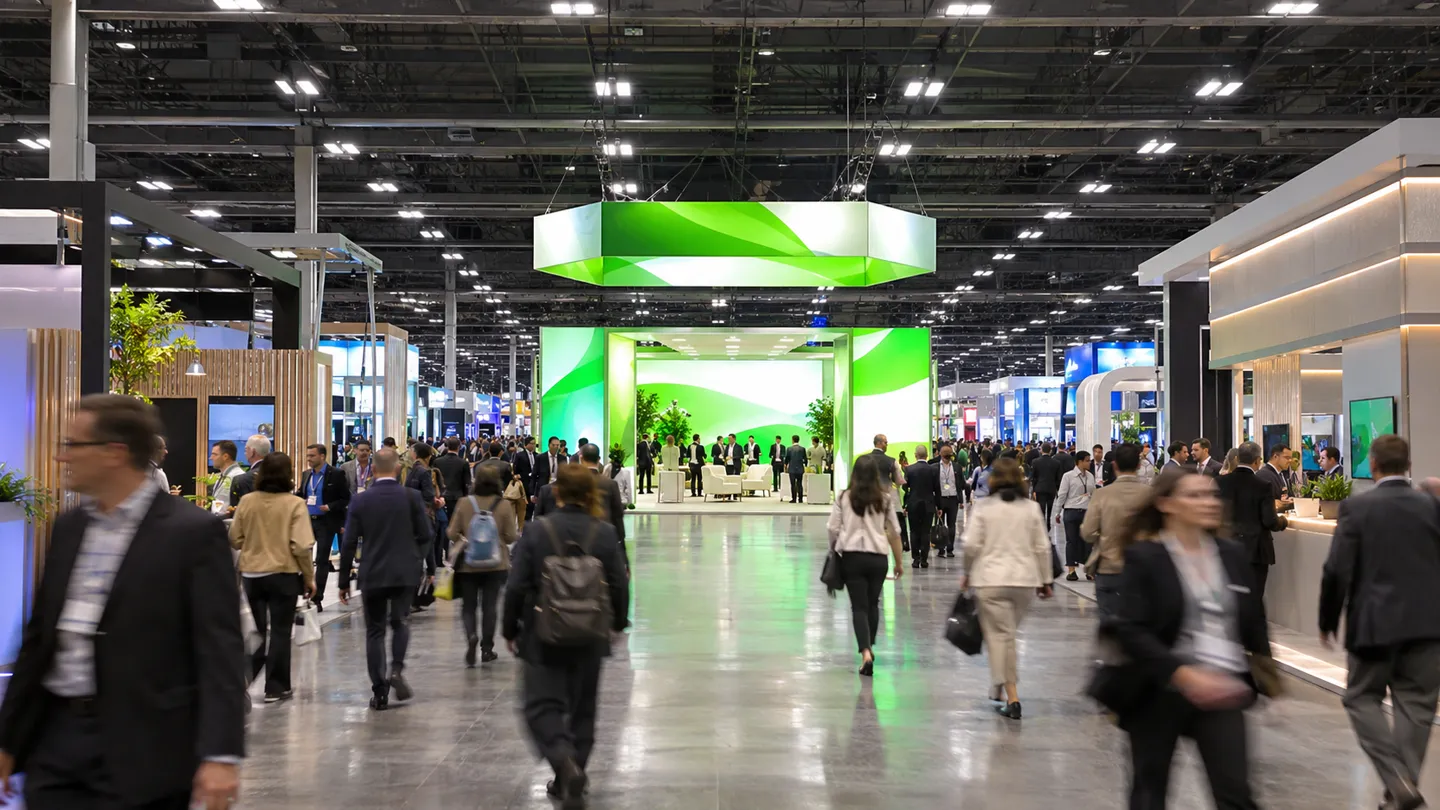
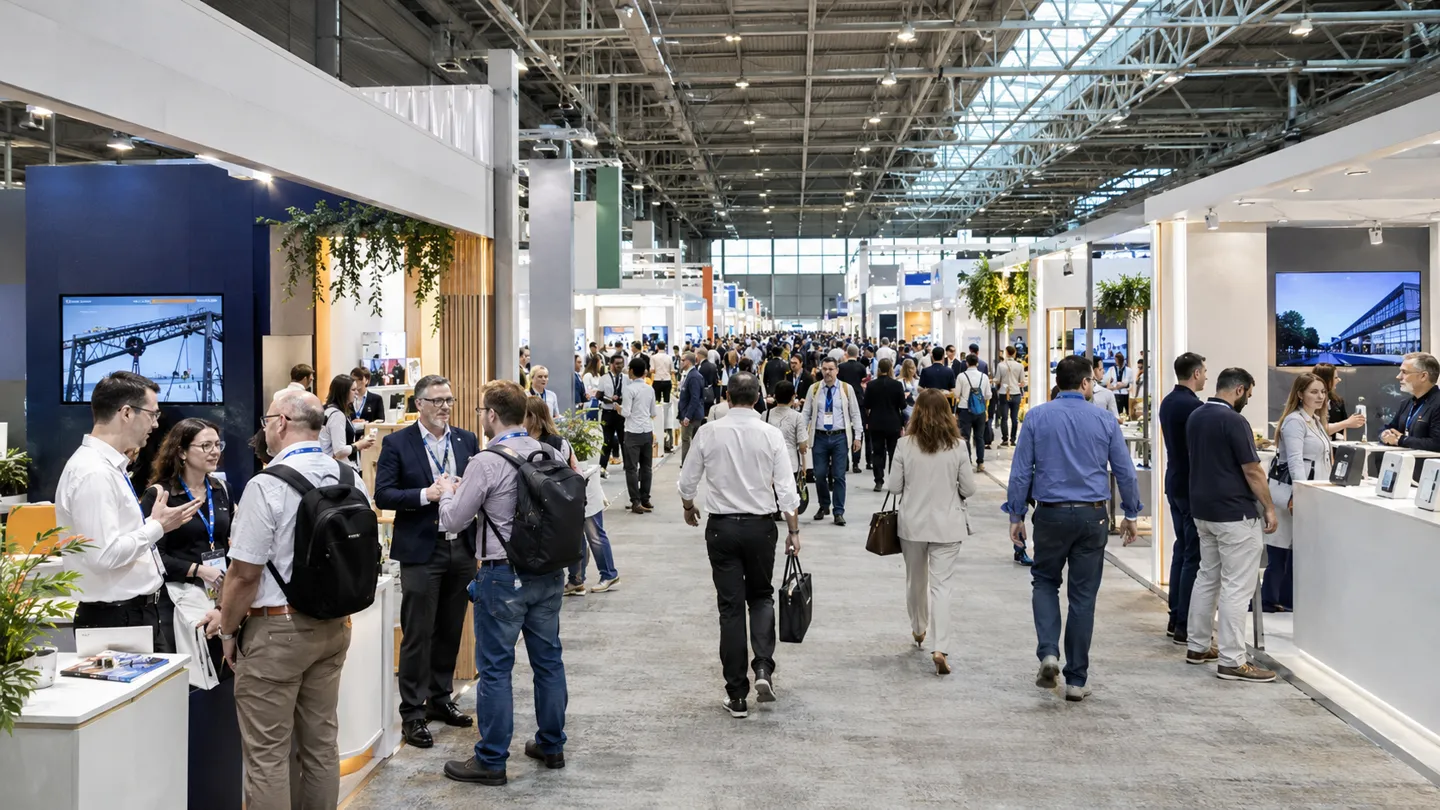
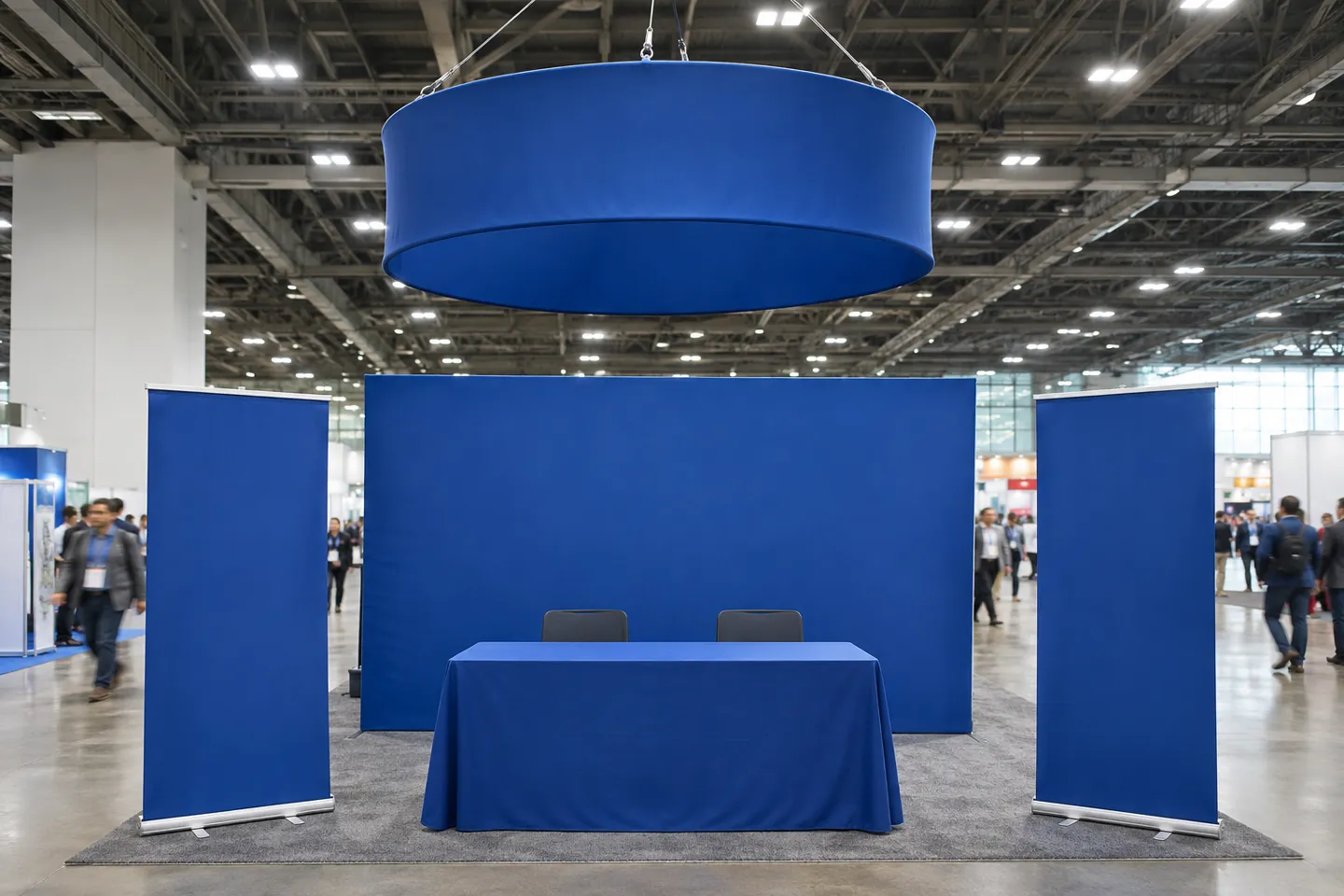
Two booths share the same aisle at the same show, same footprint, same traffic. Visitors stop at one and drift past the other, and the decision happens in about three seconds, from twenty feet away. The back wall makes that decision before anyone reads a spec sheet or hears a pitch.
This piece is about booth back walls at trade shows. It is not about photo-booth stands, party backdrops, or step-and-repeat media walls; same word, different product. Here you will find the seven backdrop types worth knowing, how each one pairs with booth size and lighting, what rent, buy, and custom really cost once the venue adds its fees, and how to keep one wall alive across a whole show season.
What a Booth Backdrop Is Actually For
A backdrop has one job: turn aisle traffic into booth traffic. Everything else it does, branding, product staging, a backdrop for meetings, hangs off that. So the useful question is never “which wall looks coolest” but “which wall gets my kind of visitor to walk in,” and that depends on your booth size, how many shows you do a year, and who assembles it.
If you are collecting visual ideas before you commit, Pinterest boards and Behance projects are fine for style, and nothing beats walking the aisles at your own industry’s show with a camera. The rest of this article is the decision layer those photo galleries skip: which structures exist, what they cost, and where each one stops working.
Seven structures cover nearly every back wall you will ever see:
| Tipo | What it is | Typical user |
|---|---|---|
| Pipe and drape | venue-style fabric hung on an adjustable tube frame; the default look of a bare booth space | First-time and budget exhibitors |
| Pop-up fabric display | folding scissor frame with fabric or laminate panels | Occasional exhibitors who self-haul |
| Seamless tension fabric wall | dye-sublimated fabric stretched tight over an aluminum frame | Small businesses buying their first owned wall |
| SEG lightbox | aluminum frame with built-in LEDs and silicone-edge graphics | Brands that want the glow |
| Modular hard wall | reusable extruded aluminum system with shelves, screens, and recesses | Companies on a multi-show circuit |
| Custom hard build | wood or metal construction built to a one-off design | Exhibitors with larger budgets and specific brand worlds |
| LED video wall | tiled screens as the wall surface | Tech, AV, and content-led brands |
Backdrop Types, Sizes, and Lighting: The Full Map
The seven types differ in more than looks. Each one carries its own frame logic, price band, and setup style, and each one fails in a different venue. Here is the map, group by group.
Pipe and Drape and Pop-Ups: The Entry Tier
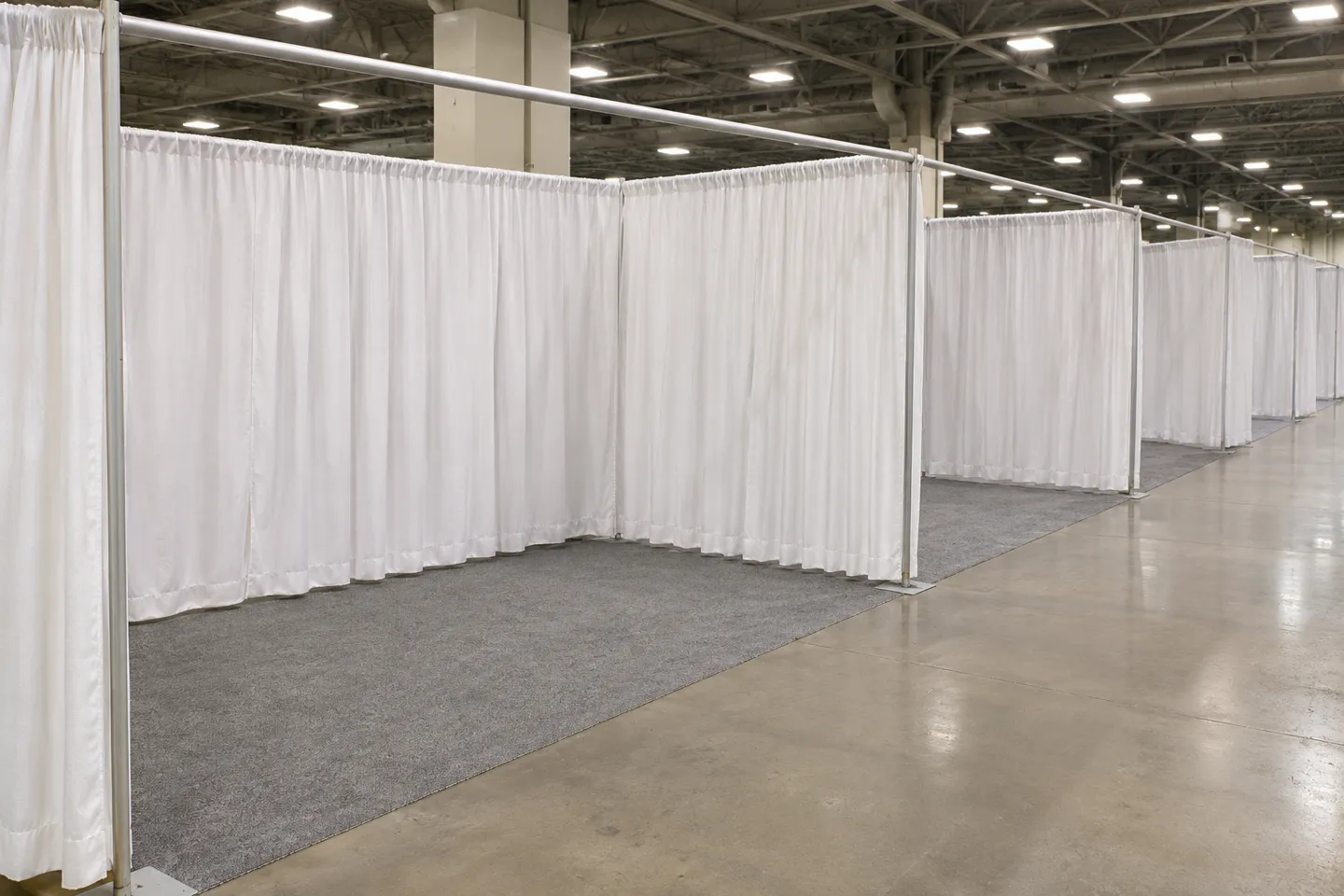
Pipe and drape is what an empty exhibit hall comes with: vertical uprights, a crossbar, and a hanging curtain, usually supplied by the show decorator. It gives you a clean background and almost nothing else; no graphics unless you add them, no shelving, no depth. Its real role is as the neutral baseline you upgrade from.
Pop-up displays step up from there. A folding scissor frame opens into an 8 ft or 10 ft curve or flat wall, with fabric panels or laminated bars that attach magnetically. One person can set one up in minutes without tools, which is why they dominate the entry tier. The trade-offs are shelf life and fit: the curve eats usable floor depth, panels can bow over years of repacking, and the look reads “basic” in a hall of backlit walls. For a first show or a test booth, though, nothing beats the price.
Seamless Tension Fabric Walls: The Portable Mainstream
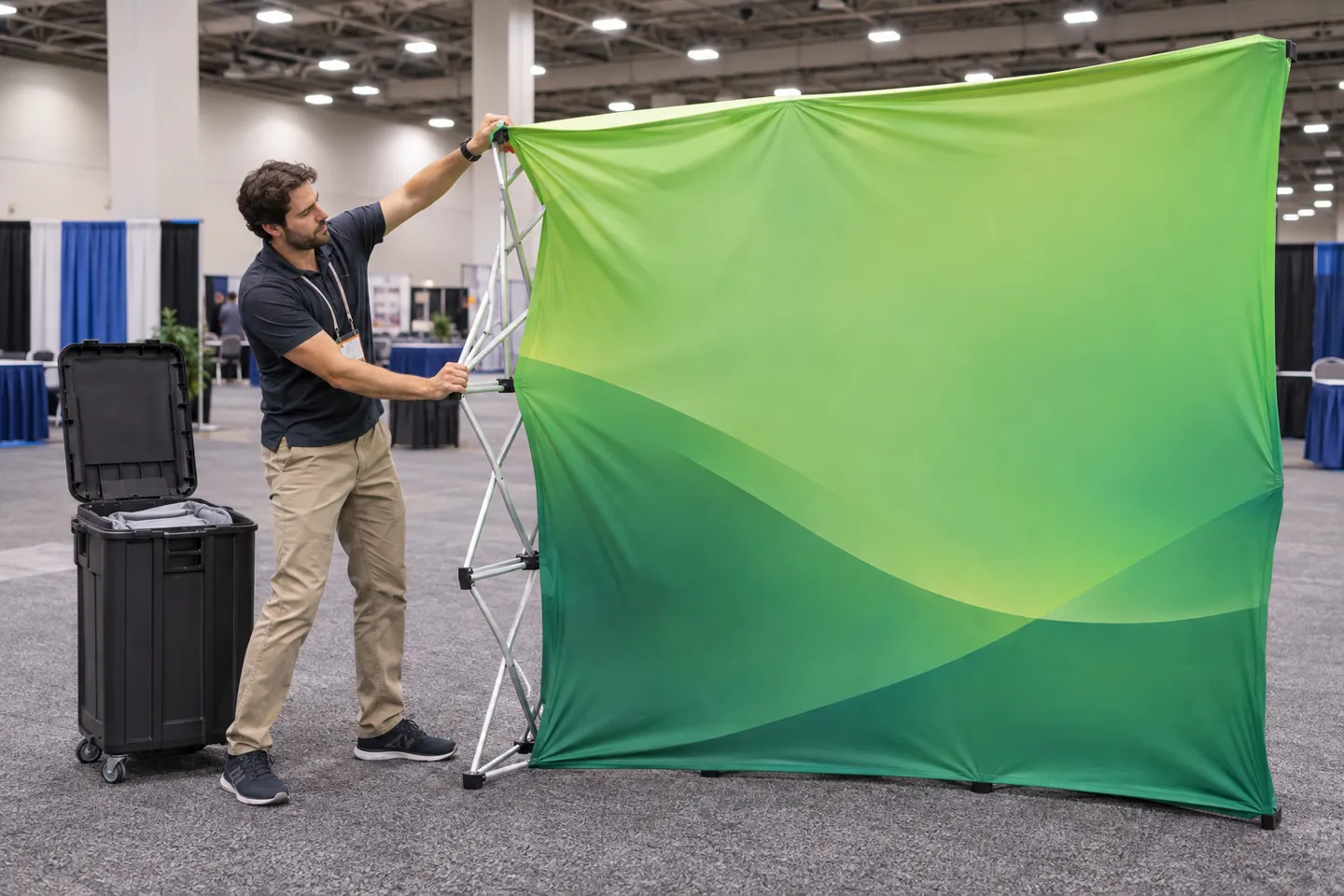
A tension fabric wall is a thin aluminum frame wrapped in dye-sublimated fabric that stretches tight like a drum skin, front and often around the sides. The whole thing packs into a bag or a small case. This is the workhorse of the portable world and the default answer to “I need a 10 ft back wall with my branding on it.”
Standard widths run 8 ft, 10 ft, 15 ft, and 20 ft, and a 10×20 booth is usually two 10 ft walls side by side. A clear message on the fabric matters more than extra props; crowding the space is the most common way a 10×20 stops working.
SEG Lightboxes: Where Backlit Walls Go Wrong
A SEG lightbox is an aluminum frame with LED strips inside and a silicone-edge graphic that tucks into the frame’s channel. Unlit, it is a tension fabric wall; lit, the fabric diffuses the LEDs into an even glow. That glow is the single most attention-grabbing move available to a small booth, which is why lightbox photos dominate every backdrop gallery.
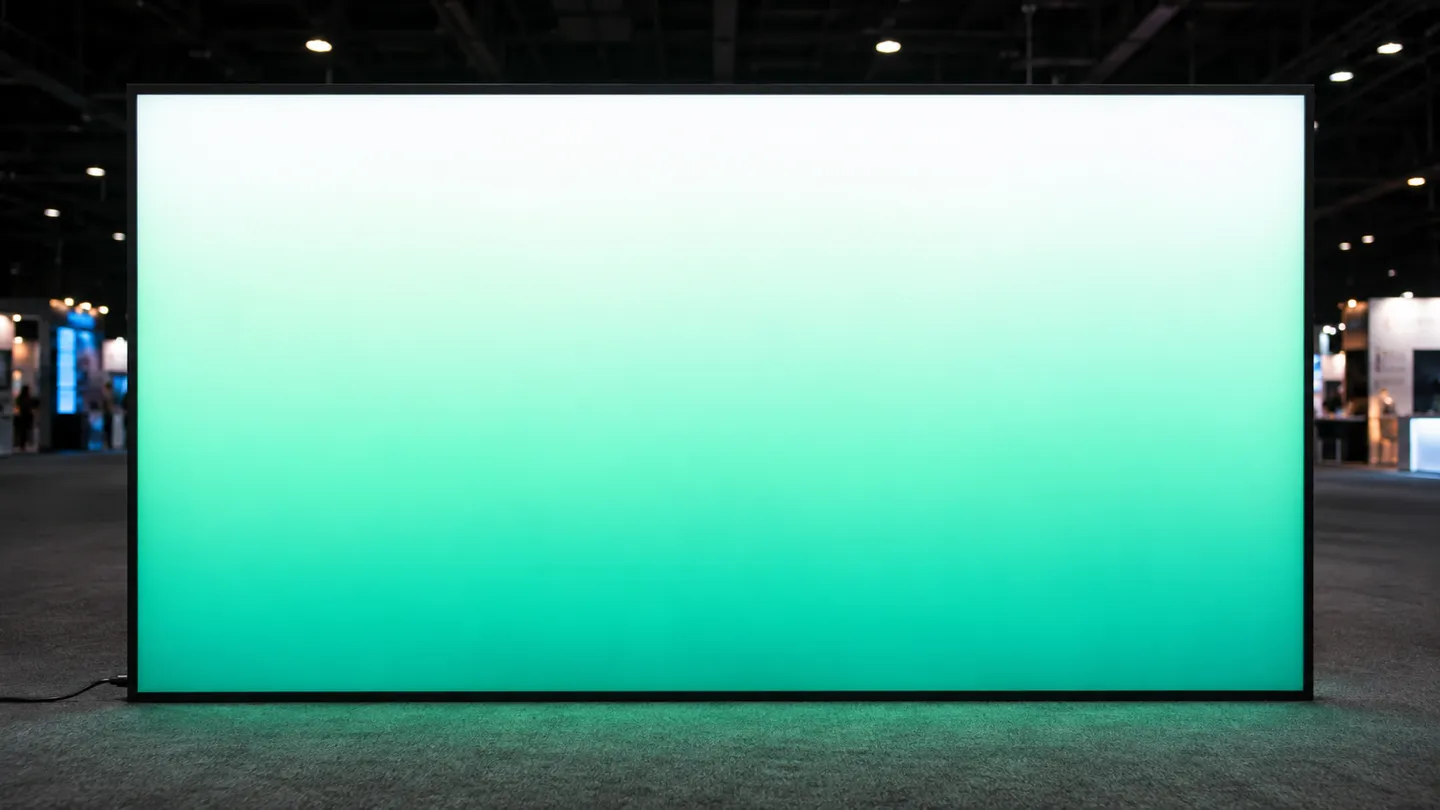
The photos are also the trap. Product shots are almost always taken in a blacked-out studio, and exhibitors who bought on the render keep discovering the same thing: in a hall with full house lighting, a lightbox reads far more subtly than it did on screen. Veteran buyers now treat this as a checklist item. Light quality is the real quality: uneven color temperature across the panel and a graphic without proper tension are the two defects that separate a premium wall from a disappointing one.
- Ask for a photo of the exact unit set up in normal room light, not a studio render.
- Ask what happens when LEDs die, and what the spare-parts policy is.
On price, expect community-reported figures of roughly $2,500 to $5,000 for a 10 ft backlit kit from the major portable brands (r/tradeshows thread, 2026). Quotes far below that range usually mean a reseller with no reviews standing between you and a factory you cannot vet.
Modular Hard Walls and Custom Builds
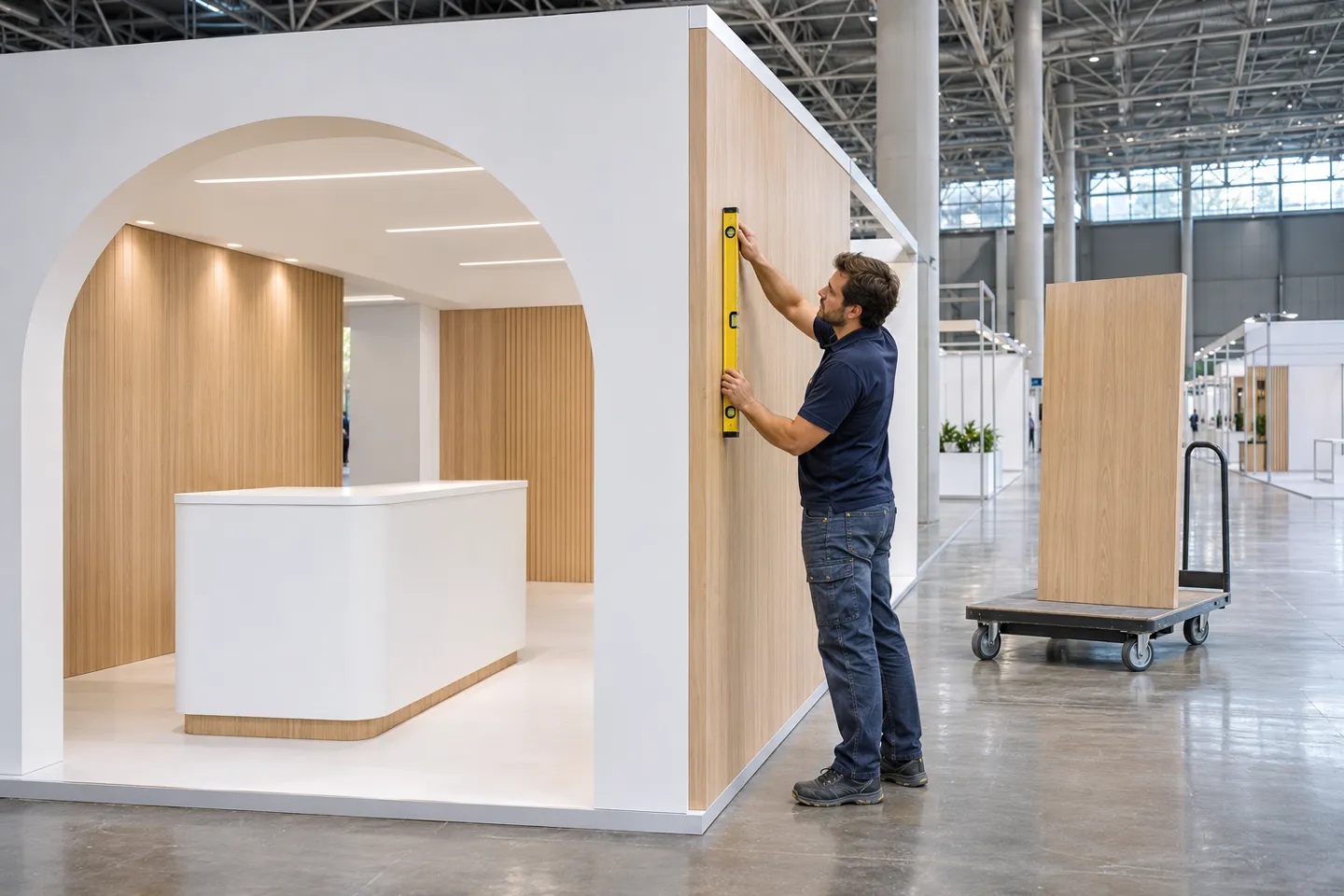
Above the fabric tier, walls stop being printed sheets and start being structures. Modular systems use extruded aluminum beams that reconfigure show after show: add a slatwall panel for hanging product, recess a monitor, bolt on shelving, curve the wall, extend it from 10 ft to 20 ft. Because the frame is hardware rather than a graphic, the graphics are replaceable skins, and the same frame serves a different campaign next quarter.
Custom builds go further: wood or metal construction fabricated to a one-off design, with curves, double-deck levels, kitchens, conference nooks, whatever the brand world needs. A full LED video wall can ride on either path as the wall surface itself.
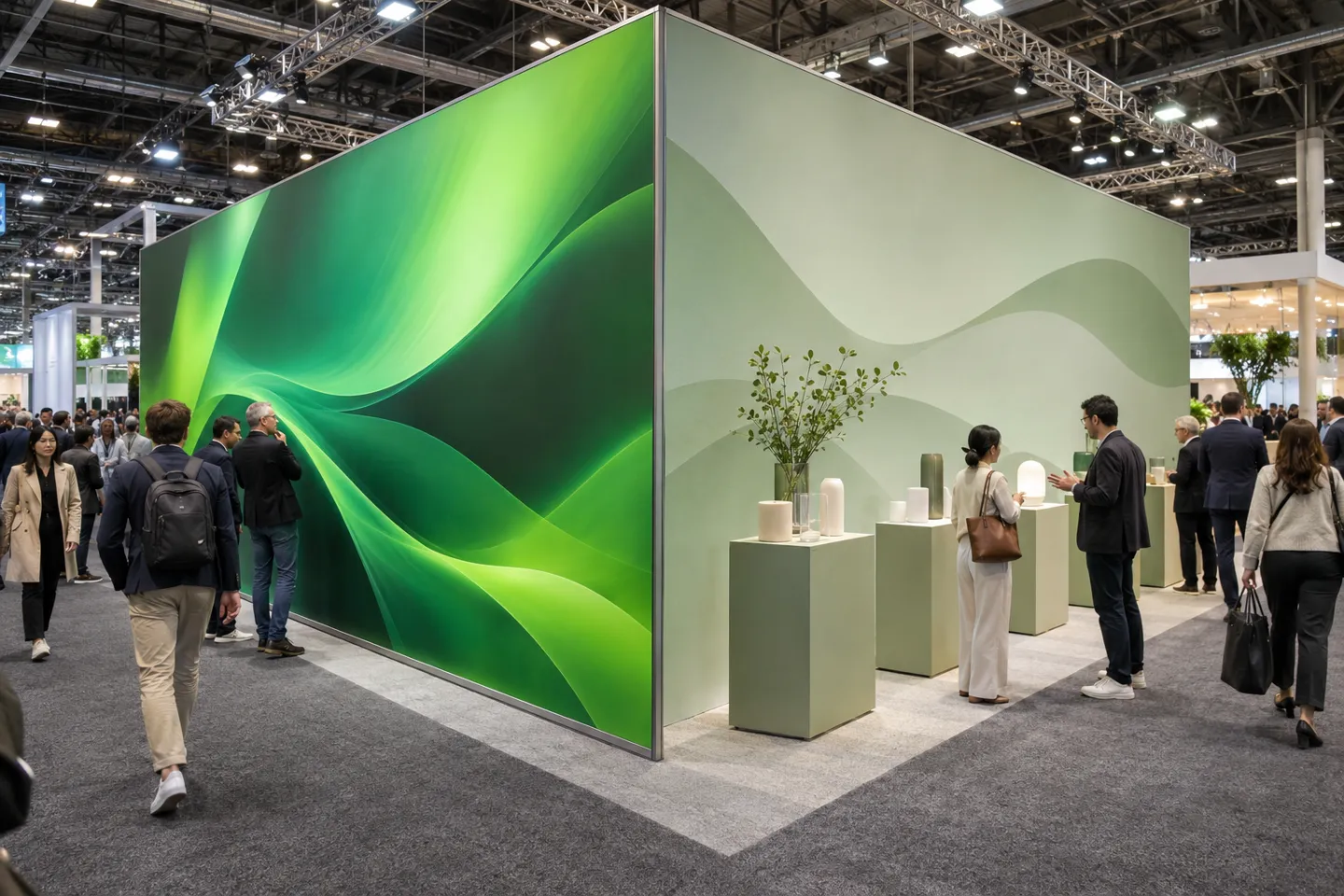
The dividing line is not budget size; it is reuse. A system or a custom build only pays for itself across multiple shows, multiple configurations, or graphics that change while the wall stays. If that is your situation, the question shifts from “which type” to “who builds it,” which is the last section of this piece.
| Tipo | Typical sizes | Setup | Community-reported price band | Best fit |
|---|---|---|---|---|
| Pipe and drape | venue standard, any width | decorator or self | often included with space | bare-baseline booths |
| Pop-up | 8-10 ft | self, minutes, tool-free | hundreds to ~$2k | first shows, self-haulers |
| Tension fabric wall | 8/10/15/20 ft | self, tool-free | ~$1k-$4k | portable mainstream |
| SEG lightbox | 8-20 ft | self or hired, 1-2 people | ~$2.5k-$5k | attention-seeking small booths |
| Modular system | 10-40+ ft, reconfigurable | hired or trained self | ~$5k-$20k+ per configuration | multi-show circuits |
| Custom build | any, incl. double-deck | builder crews | ~$15k-$150k+ range | brand worlds, large programs |
| LED video wall | modular tiles | AV provider | purchase or per-show rental | content-led brands |
Rent, Buy, or Build Custom: What Each Path Really Costs
The type map answers “what it looks like.” The money question is different: how do you get the wall? Three paths exist, and the forum arguments about them are loud because the honest answer depends on your show count, not on the wall.
The Rental Math
Renting means a supplier’s hardware plus your graphics, or a fully staffed package from the show’s official contractor. The much-quoted advice among exhibitors is to buy the graphic and rent the hardware: graphics are the cheap, reusable part, and frames are the bulky, storage-hungry part (r/tradeshows thread, 2026).
The other rental decision is who runs the project. Official general contractors handle everything, freight to electrical, and exhibitors who used them for years describe the same arc: convenience at first, then a switch to an independent vendor once the invoices outgrow the budget (r/Entrepreneur thread, 2024). Rental fits exhibitors doing one show a year, testing a new show, or unwilling to store anything. Its failure mode is cumulative cost: rent the same wall often enough and you could have owned it twice.
The Purchase Math, Including the Fees Nobody Quotes You
Buying a portable wall looks simple: a few thousand dollars, yours forever. The exhibitor-ledger version has more lines. One small-business owner breaks a single 10×10 show down to roughly $25,000 all-in, booth space, hotel, airfare, and booth, and notes that “a crappy booth runs $10-15k” before the venue touches it (r/Entrepreneur thread, 2024).
Then the venue adds its layer. Material handling, called drayage, is the fee for moving your crate from the dock to your booth, and it bills by weight with minimums (r/Entrepreneur thread, 2024). In one exhibitor’s ledger, a small UPS box costs a $200 minimum to reach the booth, and palletized items add about $1,000 each on top of normal freight. The same ledger shows why exhibitors skip venue AV rental entirely: renting a TV for three days runs about $1,000 while buying one costs about $500, so some veterans buy, use, and give it away. Deadlines carry their own penalty. Miss the advance-order window for labor and services and floor rates can add 20 to 50 percent or more (Condit, 2026).
The purchase path fails when the wall becomes shelfware: one show a year means the wall sits in storage eleven months, and storage, like drayage, is a recurring bill people forget to model.
When Custom or Hybrid Starts to Win
Custom and hybrid paths stop looking extravagant once usage intensity crosses a threshold. Industry veterans draw the line by two questions: who will handle the unit, and how often? A wall that travels three to five times a year and gets assembled by a different team each time needs durable hardware, a warranty, and a hard shipping case, while a once-a-year self-setup can stay cheap (r/tradeshows thread, 2026). The commonly repeated warning runs the other way too: unless you exhibit at many national shows per year, avoid going too custom too early (r/tradeshows thread, 2026).
The hybrid splits the difference and fits most growing programs: own the core backlit wall that defines the booth, rent the counters, furniture, and extras that change per show. The decision table below folds the whole argument into one grid.
| Path | Shows per year | Who builds | Graphics change often? | You are responsible for |
|---|---|---|---|---|
| Rent | 1 or fewer | supplier or venue crew | yes, cheap to redo | nothing physical, everything financial |
| Buy portable | 1-3 | your own staff | possible but reprints cost | storage, transport, repairs |
| Hybrid | 2-6 | your staff + rental support | core stays, per-show extras change | storing and shipping the core |
| Custom build | 3+ or flagship shows | builder crews | re-skins and refreshes | vendor management, approvals |
Making One Backdrop Survive a Season
If the wall will see more than one show, three questions decide whether it thrives or dies in a crate. First, frame life: who handles the unit and how often, because a wall assembled by a different crew every show needs commercial-grade hardware and a real warranty, not consumer-grade convenience (r/tradeshows thread, 2026). Second, graphics swap: can the print be replaced without replacing the frame? SEG and modular systems are built around that swap; hardboard and direct-print panels are not, and a rebrand becomes a new purchase. Third, logistics radius: owning means warehousing and shipping between shows, so crate design and weight are money. Some exhibitors dodge that whole problem by renting a local system in the show city instead of touring their own.
The honest boundaries sit in the matrix below, path by path. Venue rules add hard edges that no purchasing decision overrides: under the standard US display rules, a linear booth’s back wall may reach the full 8 ft height only in the rear half of the space, with a 4 ft cap across the front half, and island booths typically get more height, often 16 to 20 ft (IAEE Guidelines for Display Rules and Regulations, 2019; Featherlite, 2026). Check your show’s exhibitor kit before buying height, because rules vary by venue and show.
| Path | Works when | Fails when | Switch to |
|---|---|---|---|
| Self-build | true DIY budgets, craft fairs | show requires fire-rated or professional structures | pop-up or tension fabric |
| Buy portable | 1-3 shows, self-setup | graphics go stale yearly or wall tours constantly | modular system |
| Rent | rare shows, no storage | rental repeats on the same design every year | buy or hybrid |
| Own modular | steady circuit, changing layouts | shows shrink to one per year | rent at show city |
| Custom commission | flagship program, brand-critical walls | program pauses after one flagship | modular + rental mix |
Commissioning a Backdrop You Do Not Build Yourself
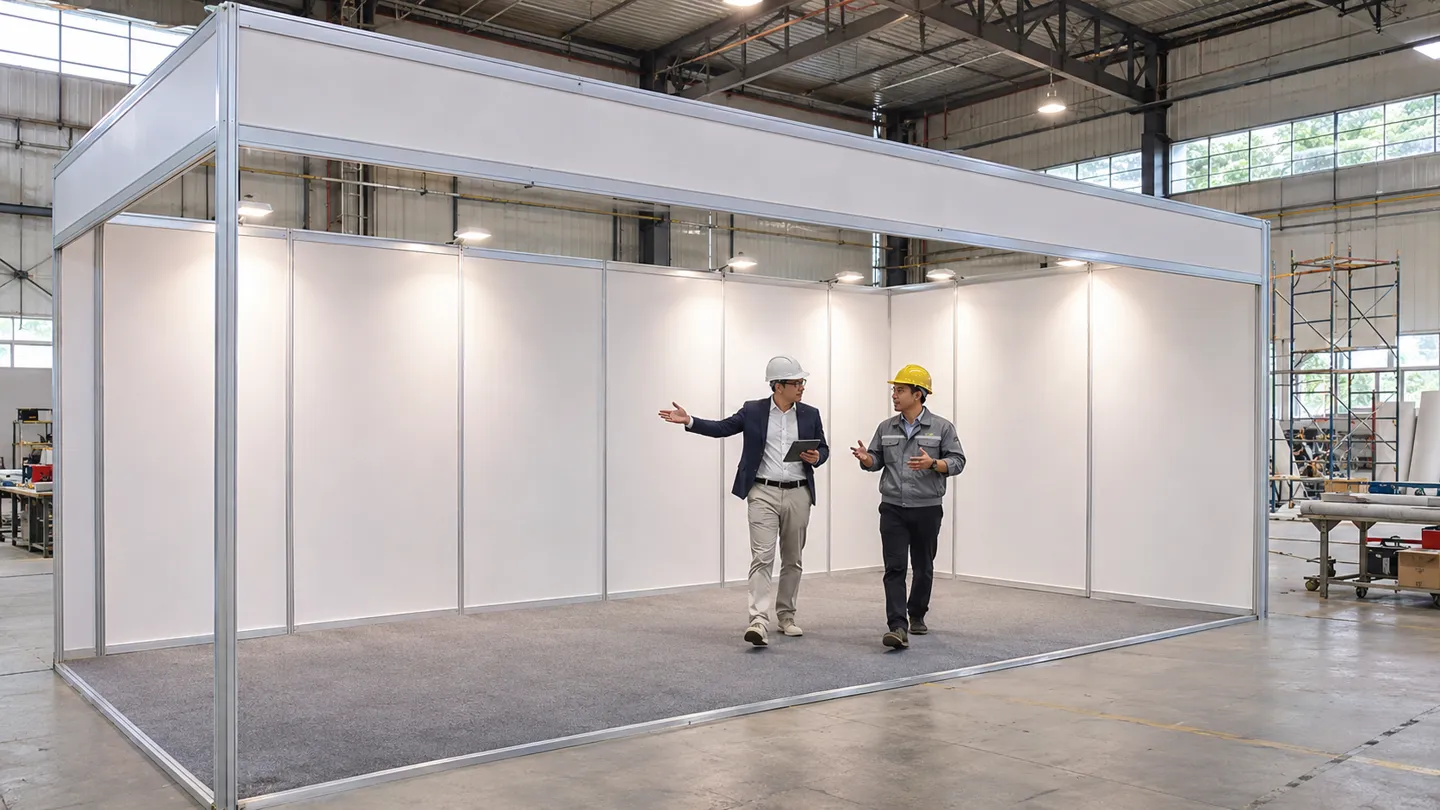
Once the wall is beyond a one-person setup, the question changes from “what type” to “who builds it,” and the criteria are checkable. First, proximity: a builder whose factory sits in your show city can reprint a damaged graphic the same morning and put a crew on site in minutes, while an out-of-town or overseas supplier means every fix travels your freight lane. Second, proof before shipping: ask whether the booth is fully pre-built in their factory and photographed for your approval, or whether you can inspect it in person before it ships; large-project builders who refuse factory visits are telling you something. Third, scope of the quote: ask specifically whether every bill, including show-organizer charges for power, rigging, and cleaning, is settled before the show closes, because post-show surprise invoices are the complaint that outlives every other one. Fourth, craft range: a wall built from a fixed catalog of parts will look like every other booth from that catalog, while a builder who works from wood, aluminum, fabric, backlit, and dimensional graphics can follow the design rather than the catalog.
Acceptance is a checklist, not a vibe. Compare the pre-build photos against the 3D rendering line by line, confirm the graphic panels you approved are the panels on the wall, and for flagship builds, visit the factory and watch it stand up. The commissioning question underneath all of it: when something breaks at 8 a.m. on show day, who is physically close enough to fix it by noon?
The Annual Program View: Reading Your Backdrop as an Asset
Zoom out to the full year and the backdrop ledger reads differently. The wall itself is the one-time or slow-cycling line; the costs that repeat every single show are drayage, install labor, shipping, and storage, and those are the lines worth engineering down. A frame that stays and graphics that swap convert each new show from a purchase into a refresh, and the spend concentrates where it actually changes results: the message on the wall, not the wall behind the message.
The same annual view restructures the supplier side. One commissioning partner for the structural work plus a local crew in each show city beats re-tendering every wall every quarter, and the commissioning criteria from the last section, proximity, pre-build proof, settled bills, are annual checks, not one-off ones. The line where all of this stops being optional sits at roughly two shows a year: below that, rent and travel light; at it or above, the frame-as-asset math starts winning.
That is also where a builder with its own factory in the show city changes the annual math. Aplus Expo builds custom and rental booths from its own 12,500 sq ft Las Vegas factory minutes from the convention centers, settles every bill, including show-organizer charges, before the show closes, and stores booth properties in more than 10,000 sq ft of warehouse space between shows, so the same wall can be refreshed, re-skinned, and re-delivered show after show. We handle the design, the print shop, the union-city coordination, and the 24/7 show-floor standby as one line of accountability, which is what the annual view is actually shopping for.
Riferimenti
- r/tradeshows. “Trade Show Backdrops.” Reddit, 2026. https://www.reddit.com/r/tradeshows/comments/1vim4p0/trade_show_backdrops/
- r/tradeshows. “Trade Show Booth Company?” Reddit, 2026. https://www.reddit.com/r/tradeshows/comments/1q5qwmz/trade_show_booth_company/
- r/Entrepreneur. “What Are Your Trade Show Booth Secrets?” Reddit, 2024. https://www.reddit.com/r/Entrepreneur/comments/19dtri0/what_are_your_trade_show_booth_secrets/
- IAEE. “Guidelines for Display Rules and Regulations.” 2019. https://www.iaee.com/wp-content/uploads/2023/06/IAEE_Guidelines_for_Display_Rules_and_Regulations-1.pdf
- EXHIBITOR Magazine. “Fabric Graphics.” https://www.exhibitoronline.com/topics/article.asp?ID=2012
- EXHIBITOR Magazine. “Exhibit Lighting.” https://www.exhibitoronline.com/topics/article.asp?ID=2286&catID=77
 English
 Spanish
 German
 French
 Italian
 Korean
 Chinese