
Trade show exhibitor insurance is one of those line items exhibitors approve without reading. The organizer’s deadline is always closer than the patience to parse it. Then something happens: a forklift grazes your crated exhibit, a visitor trips on your carpet edge. The “insurance” everyone nodded at turns out to cover one of those two events and not the other. This guide walks through what exhibitor insurance actually is, what it costs at every scale, and where the boundaries sit that no seller’s landing page will show you.
Trade Show Exhibitor Insurance: What It Is, and Why Organizers Make You Carry It
Buried inside your booth-space contract is a clause that commits you to carrying commercial general liability (CGL) insurance for the lease period. It also commits you to proving it, with a certificate of insurance (COI), before move-in. This is not a suggestion. Show organizers, the venue, and the general services contractor (GSC) routinely require exhibitors to list them as additional insureds on the policy. If your booth injures a visitor or damages the hall, the claim needs somewhere to land that isn’t their risk.
One distinction first, because the vocabulary gets blurry fast. Exhibitor insurance, vendor insurance, and contractor insurance are three different products for three different roles. A craft-fair vendor’s $49 single-event policy is not the coverage a corporate exhibitor’s risk department manages. Neither one is the contractor coverage an exhibit builder carries. This article covers the exhibitor side: what you, the company in the booth, are required to carry and should be carrying.
General liability (GL)
The liability policy you must hold for the show period, covering injury or damage to third parties.
Certificate of insurance (COI)
The one-page proof you submit to show management — insurer, limits, policy period. Keep a copy on site.
Additional insured (AI)
Parties your contract requires you to add to the policy: organizer, venue, GSC, sometimes the city.
Two details in that clause deserve your attention. First, the coverage period is rarely just show days. Most organizer manuals require coverage through move-in and move-out as well. That window is exactly when property damage happens. NAMM’s show requirements, for example, spell out coverage across the full move-in through move-out window. Second, the numbers are not a universal standard. Exhibitor manuals commonly cite $1 million per occurrence and $2 million aggregate. Individual shows go higher: a 2025 Content Marketing World exhibitor manual required $2 million per occurrence, with the organizer and the San Diego Convention Center named as additional insureds (Informa Connect, Insurance Requirements). The only universal rule is that the requirement exists. Fail to satisfy it and your exhibit can be refused at the door. Industry guidance is blunt on the penalty: an exhibitor who can’t produce proof after an incident may be removed from the floor.
That’s the “why you must buy it.” The “how much” is where the confusion starts.
How Much Trade Show Insurance Really Costs: One Table, Four Structures
Google “trade show exhibitor insurance cost” and you’ll see prices from roughly $20 a month to a few hundred dollars per event. None of them are lying. They’re just describing four different products. The number you’ll pay depends on the structure you buy through, which depends on who you are:
| Struktur | Who it fits | Price reality | Achte auf |
|---|---|---|---|
| Retail single-event policy | One-off and occasional exhibitors without business coverage | From about $49 per event at ACT and Insurance Canopy (1–3 days; $99 for seven), from $63 at Eventsured | Covers one show window; renew for every event |
| Organizer-facilitated program | Exhibitors who’d rather not involve their broker | Roughly $89–$169 per show (NAMM’s non-US exhibitor program at $89; a 2025 San Diego show sold liability-only at $149 and liability with $10,000 property at $169) | Prefilled for the show’s own requirements — convenient, but you’re paying retail |
| Standalone policy from a specialty broker | Solo businesses and small firms wanting year-round cover | Roughly $125–$1,000 depending on term and limits (trade-press range) | Broker time; verify limits match each show |
| Rider on your company’s existing CGL | Corporations that already carry business liability | Usually minimal or no additional premium — show-specific riders are routine | Entirely dependent on your corporate policy’s scope |
The decision rule that follows is simple. If your company already carries CGL (most corporations do), your first phone call goes to your own risk or finance department, not to a vendor website. Exhibitor insurance exists for the gap cases: sole proprietors, international exhibitors whose home policy doesn’t reach US shows (NAMM runs a dedicated $89 program for them), and companies that want to keep show claims off their corporate loss record.
Two hidden costs rarely appear in the headline price. Some organizers or their insurance administrators charge a handling fee per certificate. Vendors report $20-per-certificate charges at smaller shows. And while retail policies advertise free additional insureds, broker-handled programs sometimes price them in. Add both to your comparison before you buy on sticker price.
Your $1M Policy Covers Other People — Not Your Booth
Here is the sentence most exhibitor insurance landing pages will not write, because they sell the policy that follows it: general liability covers damage you cause to third parties. It does not cover damage to your own exhibit.
Reading Your Show’s Insurance Clause Like a Risk Manager
Take the insurance clause out of your exhibitor services manual and read it four times, for four things. The limit required: again, typically $1M/$2M, sometimes $2M per occurrence, and your show’s number governs. The parties to name as additional insureds: organizer, venue, GSC, and occasionally the city. The coverage dates: confirm they span move-in and move-out, not just show days. And the certificate deadline: many organizers require the COI 30 days out, and some enforce a hard cutoff.
Then notice what the clause does not say. Show manuals are explicit that the venue and organizer take no responsibility for your property. The Content Marketing World manual states that neither show management nor the San Diego Convention Center is responsible for loss or damage to exhibits, products, or equipment from fire, theft, accident, or any other cause while in the building (Informa Connect, Insurance Requirements). Put that next to a liability policy that only pays third parties, and your own exhibit sits in a coverage gap by default. Often it’s the single most expensive asset in your booth.
The Coverage Boundary Matrix
| What happens | General liability | Exhibit property coverage | Cancellation coverage |
|---|---|---|---|
| Visitor trips and injures themselves at your booth | Paid — third-party bodily injury | Nein | Nein |
| You damage the venue floor or a wall | Paid — third-party property damage | Nein | Nein |
| Your exhibit damages a neighboring booth | Usually paid — neighbor is a third party | Nein | Nein |
| Your own display is crushed by show-floor equipment | No — it’s your property | Paid (if you hold it) | Nein |
| Your crated exhibit is damaged in transit | Nein | Depends on policy wording — some cover transit, some don’t | Nein |
| The show is cancelled or postponed | Nein | Nein | Paid (if you hold it) |
Why does this boundary confuse so many buyers? Single-event vendor products describe themselves as protecting “your booth and your business.” That’s true only in a narrow sense: the booth is where you cause the injury. It is marketing shorthand, and it papers over a structural fact. Liability and property are two separate purchases with two separate claims processes. If your exhibit package is worth real money (a custom booth, graphics, and AV can run five figures or more), that gap is the most important thing in this article.
The coverage boundary
Your $1M liability policy pays for damage you cause to other people and their property.
It pays nothing for damage to your own exhibit.
Protecting the Exhibit Itself: Transit, Warehouse, and the Show Floor
If general liability doesn’t protect your exhibit, what does? The honest answer: your company’s property insurance, if it extends off premises. Beyond that sits a patchwork of smaller coverages, and they all have edges. Walk your exhibit through its physical journey, segment by segment. The coverage changes at every handoff.
In Transit: The Valuation Trap
When you ship your exhibit by common carrier, you are automatically “protected” by the carrier’s limited liability. Insurers call it valuation, not insurance: carriers aren’t insurers. Read the number before you feel protected. Standard valuation runs $0.30 to $0.60 per pound (ExhibitorOnline, “Got It Covered?”). An experienced exhibit manager tells the story of a graphic panel that vanished in shipment. If that math doesn’t match what your exhibit is worth, you buy additional valuation, commonly quoted around $8–$12 per $1,000 of declared value. Or you rely on a door-to-door all-risk rider on your corporate property policy. And note the temporal edge: carrier valuation ends at the dock. Once your crates sit at the advance warehouse or the venue, the carrier’s obligation is over.
Carrier valuation, in practice
$1.80
A three-pound graphic panel vanished in shipment. At the carrier’s standard rate, that was the whole claim. (ExhibitorOnline)
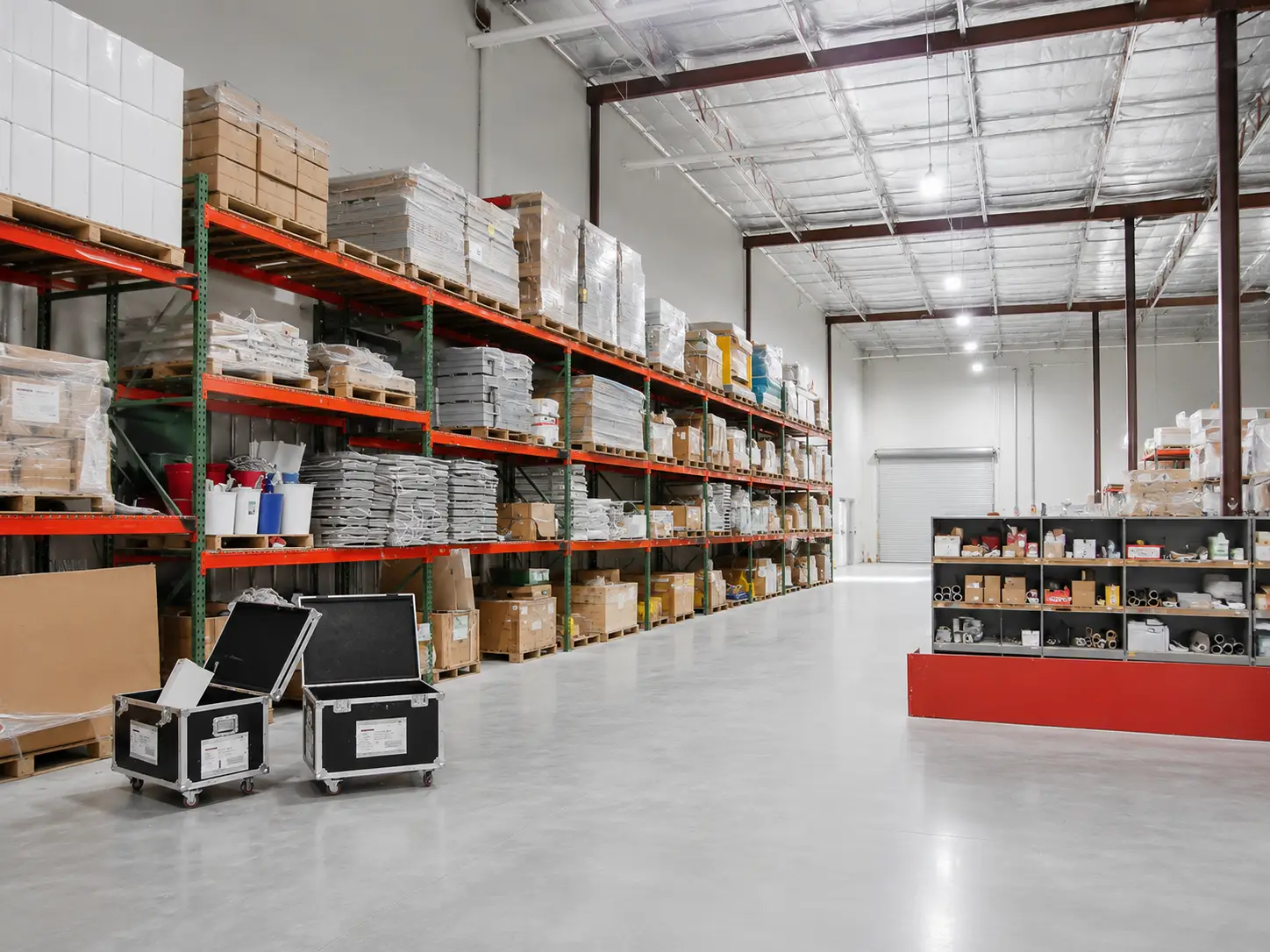
Warehouse and Show Floor: The Off-Premises Question
Your company’s property policy may or may not cover exhibit assets away from company premises. The locations in question: advance warehouse, exhibit house, venue floor. The answer is in your policy wording, not in any summary. If you manage exhibiting for a corporation, ask your risk department four questions. Are exhibit properties covered off premises? At replacement value or depreciated value? What is the deductible? Corporate policies commonly run four-figure deductibles per claim. And what documentation would a claim require: serial numbers, invoices, photos? If the answers are “no,” “depreciated,” or “too high to bother,” you have two options. Buy an exhibit-specific property policy, or deliberately self-insure small losses and cover only catastrophic ones. One further trap: some firms skip exhibit property coverage on purpose, because small claims raise the corporate premium. That’s a legitimate strategy, but only if the budget can truly absorb a total loss of the exhibit.
Cancellation Coverage, and the Non-US Exhibitor Gap
Two less obvious products complete the picture. Event cancellation insurance pays when the show itself doesn’t happen: postponed, cancelled, or disrupted. Limits commonly start around $10,000–$50,000, with premiums from a few hundred dollars up. It protects your show investment, not your booth. If you exhibit primarily for lead generation, the lost-opportunity math is yours to judge.
And if your company exhibits in the United States from abroad, verify that your home-country policy reaches US shows before you rely on it. The market’s own evidence that this gap is real: NAMM runs a dedicated $89 liability program for non-US exhibitors whose existing insurance will not cover them at a US show, complete with instructions on filling in an American address. For European and Asian exhibitors spending heavily to cross the Atlantic, this is a five-minute check that can invalidate a year of assumed coverage.
When Something Goes Wrong: Evidence, Deadlines, and Who Pays
Insurance only matters in the moment you file a claim. Run the sequence once before you need it. When an incident happens at the show, first secure the scene and photograph everything: the damage, the surroundings, the condition before any repair work starts. Report the incident to the venue or show management the same day, and get a written report number. Then check your policy’s claim-notification deadline and calendar it. Windows vary from 72 hours to six months depending on the insurer. The short end can expire while you’re still dismantling the booth. Keep every document the claim will need (bills of lading, warehouse receipts, install work orders, the repair invoices). A property claim without the paper trail is a negotiation you’ll lose.
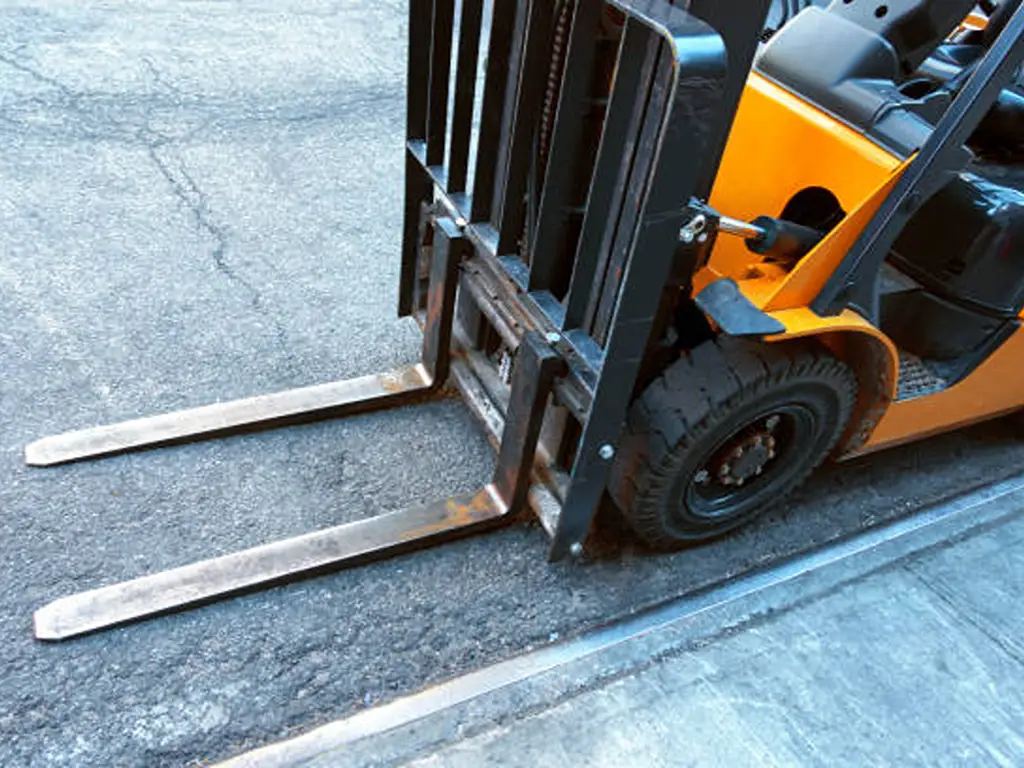
Who pays for what depends on which segment of the exhibit’s journey the loss happened in, and which party was responsible for that segment. Each handoff has its own paperwork. Your contract with each supplier should say who answers for damage in their custody. If it doesn’t, ask before the next show, not after the forklift incident. Claim-notification windows are another written-down detail worth checking in advance: industry guidance notes deadlines that range from 72 hours to six months depending on the policy.
The handoff map
In the hall
In transit & storage
The contractor interface deserves special attention. It’s the one place where your insurance file has to include someone else’s paperwork. When an exhibitor appoints its own contractor (its own installer or display builder) instead of using the show’s official labor, most shows require the exhibitor to file the contractor’s certificate of insurance with show management well before move-in. Official service contractor terms for a Las Vegas show are typical. The exhibitor-appointed contractor must carry general liability of $1 million per occurrence and $2 million aggregate, an umbrella of $1 million, and must name the show and the facility as additional insureds. The certificate must be on file ten days before move-in, or the contractor is barred from the building. The exhibitor remains responsible for its contractor’s actions on the floor. Practical translation: when you hire an exhibit builder, an AV vendor, or a transport company, asking for their COI isn’t distrust. It’s a show requirement you’re already bound by.
Finally, know your own deductible and your company’s claims philosophy before the incident. Some corporations deliberately self-insure small losses rather than file claims that could raise their rates. Decide that in the quiet months. Then the claim you file will be the one worth filing.
The Gaps Your Policy Can’t Close: Verify Suppliers, Not Just Premiums
Step back from the policy documents and the picture is this. Your liability insurance pays third parties. Your property coverage stops at edges you had to read carefully to find. Carrier valuation pays in cents per pound. The venue disclaims your property entirely. And the contractors you appoint must carry their own insurance, which you’re required to verify. The segments in between, the ones nobody’s policy quite reaches, are where exhibits actually get damaged. Those segments are all operated by suppliers.
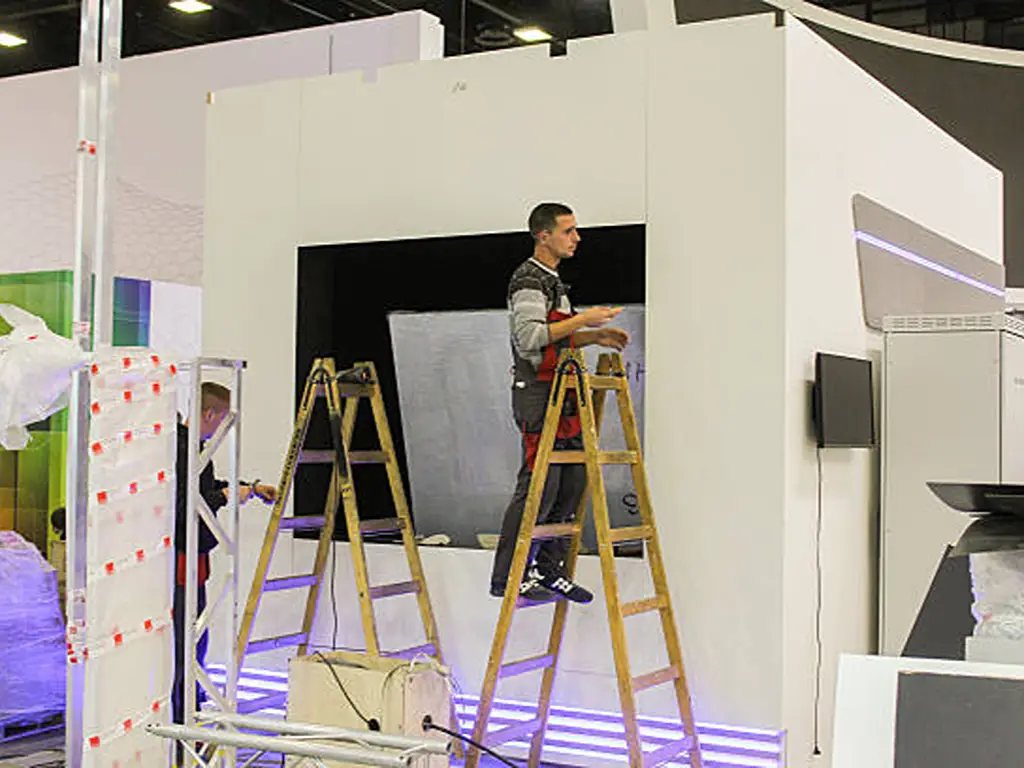
That’s why experienced exhibit managers treat vendor verification as part of their insurance architecture, not as a procurement nicety. In practice, when you evaluate the companies that will build, ship, store, and install your exhibit, you are evaluating risk controls. Does the builder trial-assemble the booth in its own facility before it ships? Or is your first glimpse of the finished exhibit on a show floor, with a three-hour install window? Does the logistics provider crate and protect, or blanket-wrap? Does the storage partner hold your property under conditions it can document? And when damage happens on site, how fast can the supplier recover? Can graphics be reprinted and repairs made within the show window? Or is your exhibit down for the remaining days? Insurance pays for the loss after it happens. Suppliers determine whether the loss happens, and how much of your show it destroys. The two belong on the same checklist:
Supplier verification checklist
Request the COI and confirm limits match your show’s requirements (GL, umbrella, auto, workers comp as applicable).
Confirm who is responsible for damage in each custody segment — carrier, warehouse, installer.
Ask how and where the exhibit is built before the show: trial assembly, factory conditions, and who signs off.
Confirm the timeline and capacity for on-site recovery — reprints, repairs, replacements.
For international exhibiting, confirm the partner can operate within US show rules (union coordination, power, rigging).
Does this replace insurance? No. The required coverage is required, and the compliance baseline isn’t optional. What supplier verification does is close the layer above the baseline: the gaps where claims can’t reach. For companies that travel to US shows from abroad, that layer also includes confirming your home policy extends to US events in the first place.
The pattern holds for every exhibiting dollar you spend. The premium buys the right to be made whole. The process decides whether there’s anything left to be made whole from. Choose the process as carefully as you choose the policy.
When you verify an exhibit partner against that checklist, our answer is on record. Aplus Expo builds every custom booth from our Las Vegas factory minutes from the convention centers, trial-assembles it in-house with graphics up before it ships, and carries the insurance file exhibitor-appointed contractors need to show. See our Las Vegas facility and build process.
Plan your next booth with the paperwork already handled
Ask for the quote that shows the factory trial build, the EAC insurance file your show contract requires, and the on-site support window — settled before you sign.
Mein Projekt startenLiteraturverzeichnis
- Candy Adams. “Got It Covered? The Basics of Exhibit Insurance.” Exhibitor Magazine / ExhibitorOnline. https://www.exhibitoronline.com/topics/article.asp?ID=2629
- IRMI. “Exhibitor Insurance.” International Risk Management Institute Glossary. https://www.irmi.com/term/insurance-definitions/exhibitor-insurance
- NAMM. “Insurance — Proof of Insurance Is Mandatory.” NAMM Summer Show Exhibitor Guidelines. https://ww1.namm.org/exhibit/summer/important-guidelines/insurance
- Informa Connect. “Insurance Requirements.” Content Marketing World Exhibitor Manual. https://informaconnect.com/content-marketing-world-exhibitor-manual/insurance-requirements/
- ACT Insurance. “Trade Show Insurance for Exhibitors.” https://www.actinsurance.com/trade-show-insurance
- Insurance Canopy. “Trade Show Insurance.” https://www.insurancecanopy.com/vendor-insurance/trade-shows
- Eventsured. “Vendor Insurance | Event Insurance for Trade Shows.” https://www.eventsured.com/vendor-insurance/
- r/tradeshows. “$1M Liability Insurance Policy for Exhibiting?” Reddit, August 2026. https://www.reddit.com/r/tradeshows/comments/1vnsthh/
- r/CraftFairs. “Question About Vendor Insurance.” Reddit, April 2026. https://www.reddit.com/r/CraftFairs/comments/1sjdu92/
- Aplus Expo. „Über uns.“ https://www.aplusexpo.com/about-us/
- Aplus Expo. „Kontakt.“ https://www.aplusexpo.com/contact/
- Aplus Expo. Homepage. https://www.aplusexpo.com/



 English
  Spanish
  German
  French
  Italian
  Korean
  Chinese